Power and Thermal BOM Lines Need Their Own AI Infrastructure Review
AI infrastructure pressure is easy to flatten into a processor or memory headline. The more useful PM sourcing question is narrower: which power, cooling, connector, and thermal support lines on a live board-level BOM now deserve closer review?
Two fresh public sources support that narrower reading. Evertiq reported on July 20 that AI demand, geopolitical tension, rising raw-material prices, and longer delivery times are adding pressure across electronics manufacturing. It specifically noted that AI data centers need advanced processors, memory chips, power management components, networking equipment, and cooling systems. Semiconductor Engineering reported the same day on data-center choke points tied to AI, politics, utilities, and supply chains, including power-supply issues, HBM and related DRAM capacity, advanced packaging capacity, and lasers for optical interconnects.
What this means for PCX buyers
For PCX buyers, the takeaway is not that every fan, power supply, connector, heatsink, relay, switch, power-management IC, or passive component is constrained. The takeaway is that AI infrastructure reporting is now naming support systems that sit close to board-level purchasing decisions. If those lines are already on a critical build path, they belong in the sourcing review before the next RFQ becomes urgent.
A practical review starts at the exact MPN, not the category label. The same headline can mean very different things for a commodity fan, a qualified high-reliability thermal assembly, a power module with a long approval path, or a connector locked to a customer AVL. PCX’s role is to help buyers separate the market signal from the purchasable part number, then check supplier options, alternates, documentation, and quality controls before timing pressure narrows the choices.
The power and thermal lines to separate from the headline
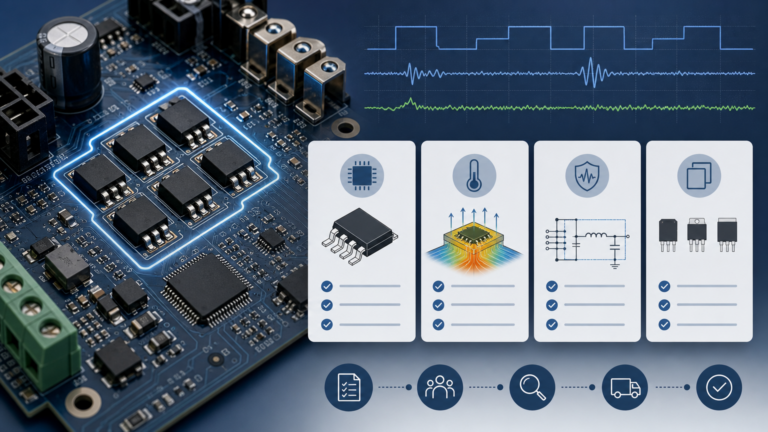
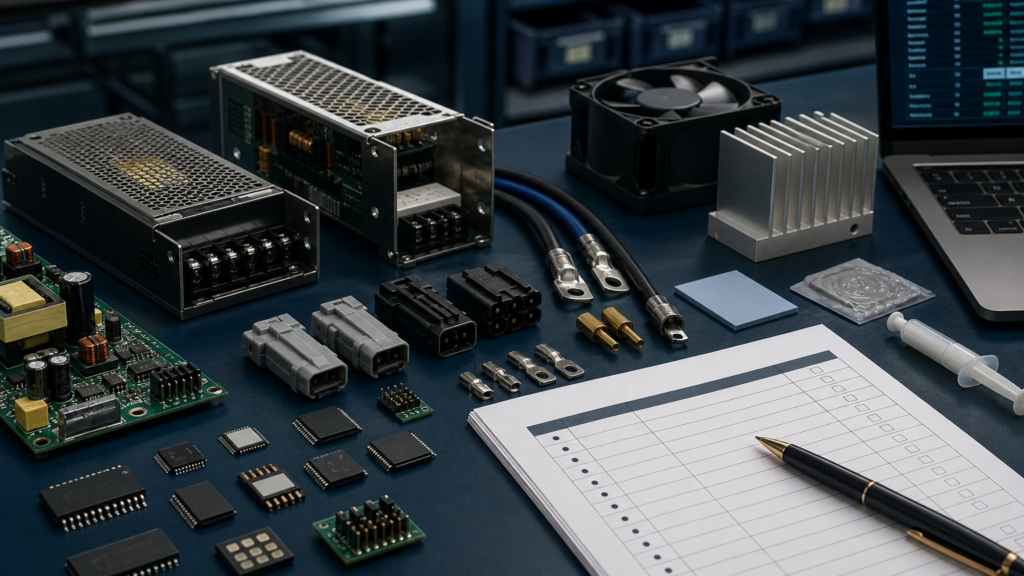
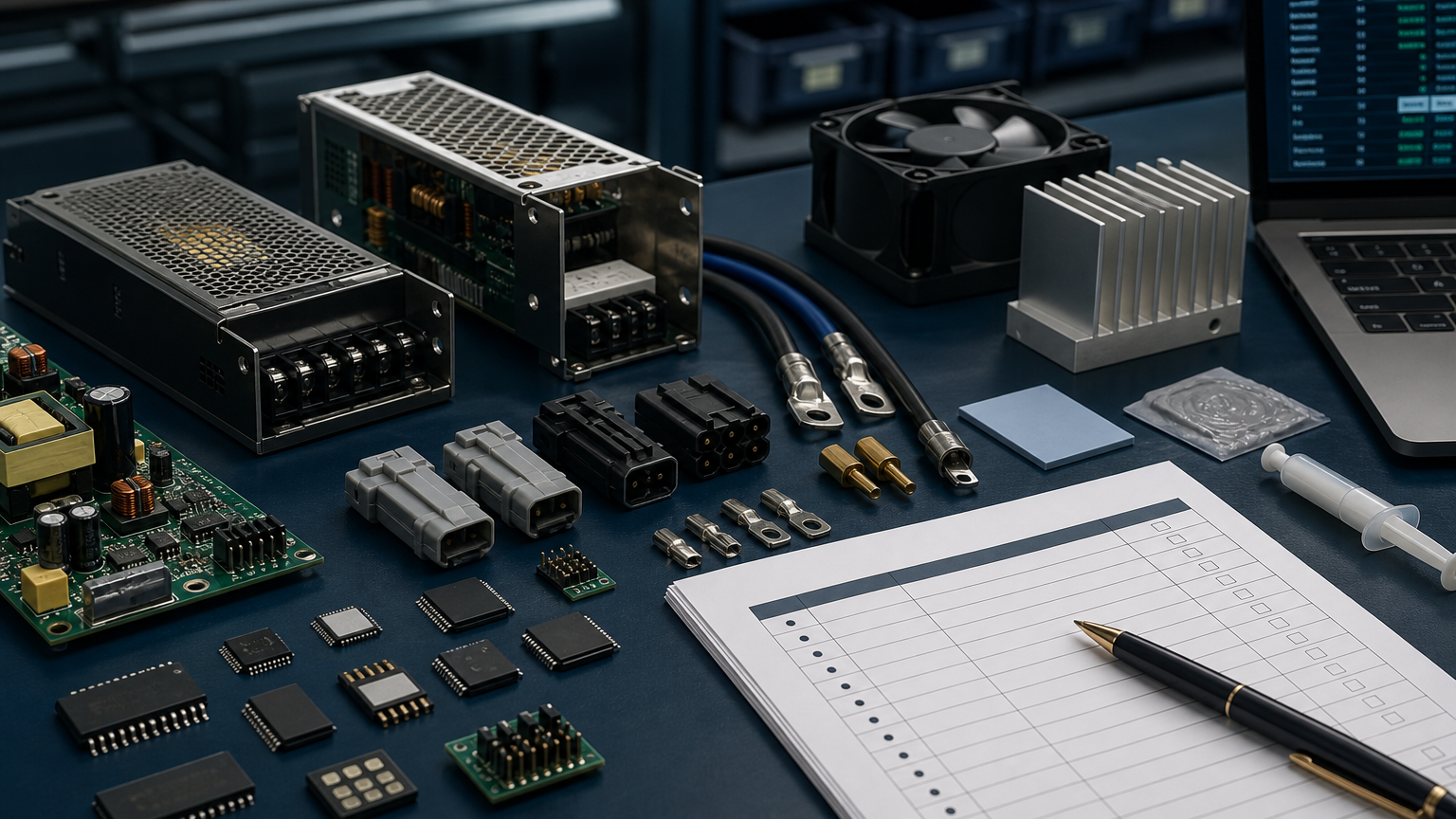
Power and thermal exposure can be hidden inside a BOM because these lines often look less strategic than processors or memory. In practice, they can determine whether a build can ship, pass qualification, or stay within thermal margin. The first PM pass should separate AC/DC and DC/DC power supplies, power-management ICs, MOSFETs, diodes, inductors, relays, high-current connectors, fans, heatsinks, thermal interface materials, and cooling assemblies into their own review group.
That review should not assume immediate scarcity. It should ask whether the part family is close to the pressures named by the sources: data-center power delivery, cooling systems, optical-networking infrastructure, packaging constraints, utilities, and adjacent raw-material or logistics cost drivers. The answer may be no for many ordinary items. The value is in identifying the few lines where a delayed answer would create disproportionate schedule or quality risk.
What to verify before changing a source
When a support component becomes difficult to buy, teams sometimes move quickly to a visually similar alternate. That is where risk enters. A thermal part may have interface, airflow, acoustic, mounting, flammability, or environmental details that are not obvious from a short description. A connector may carry plating, mating-cycle, current, temperature, agency, or harness constraints. A power device may depend on package, layout, derating, protection behavior, or EMI performance.
Before switching supply, buyers should capture the approved manufacturer, full MPN, drawing or datasheet revision, environmental and agency requirements, acceptable date-code range, test or inspection expectations, and who can approve an alternate. If the buy moves outside a normal channel, inspection and traceability requirements should tighten rather than loosen. The PCX Star Quality Program is relevant when sourcing teams must evaluate unfamiliar offers, alternate channels, or documentation gaps.
How to read fresh AI infrastructure signals responsibly
Evertiq’s July 20 article supports the view that electronics manufacturers are facing a more difficult mix of AI demand, geopolitics, materials pressure, and longer delivery times. Semiconductor Engineering’s July 20 article supports the view that data-center expansion has multiple choke points, including power supply, memory, packaging, optical interconnect, utilities, and politics. Neither source should be used as proof that a specific PCX customer’s part is allocated, that a quoted price is about to move, or that a substitute is safe without engineering review.
That distinction is commercially important. Unsupported urgency can lead to overbuying, weak alternates, and quality exposure. Underreacting can leave a buyer trying to qualify a power, cooling, or connector alternate after production already needs the part. The safer middle path is a documented sourcing file: exact MPNs, forecast need, approved alternates, supplier responses, inspection requirements, and escalation criteria.
A short checklist for the PM sourcing file
- Flag power supplies, power-management ICs, thermal products, high-current connectors, fans, heatsinks, relays, switches, inductors, MOSFETs, diodes, and optoelectronic-adjacent lines that appear on critical builds.
- Confirm which items have approved alternates and which only have informal suggestions.
- Ask suppliers whether quote validity, minimum order quantity, delivery assumptions, or documentation requirements have changed.
- Document thermal, electrical, mechanical, environmental, and agency boundaries before considering substitutes.
- Decide which parts should be reviewed on a 12-month or 15-18-month forecast horizon because qualification time is longer than normal replenishment time.
Where PCX can help
PCX can help buyers turn a broad infrastructure signal into a parts-level sourcing review. For power-management ICs, connectors, electromechanical components, and related support lines, the useful evidence is the exact MPN, required quantity, date need, acceptable alternates, and any quality or documentation requirement that cannot be compromised.
If your team is reviewing a live BOM against AI-infrastructure power or thermal signals, send the relevant MPNs and timing needs through the PCX RFQ form. PCX can help evaluate sourcing paths, but the decision should stay tied to evidence at the part-number level.