PCB material stories can sound remote from day-to-day component buying until a board build depends on a specific laminate, dielectric performance target, copper profile, or approved fabricator. A fresh Evertiq analysis/interview on Europe’s PCB supply-chain readiness points to laminate and glass-fabric pressure as a watch item. For buyers, the safe interpretation is narrow: do not treat a materials headline as proof that every board is constrained, but do not leave stack-up dependencies outside the sourcing review.
What this means for PCX buyers
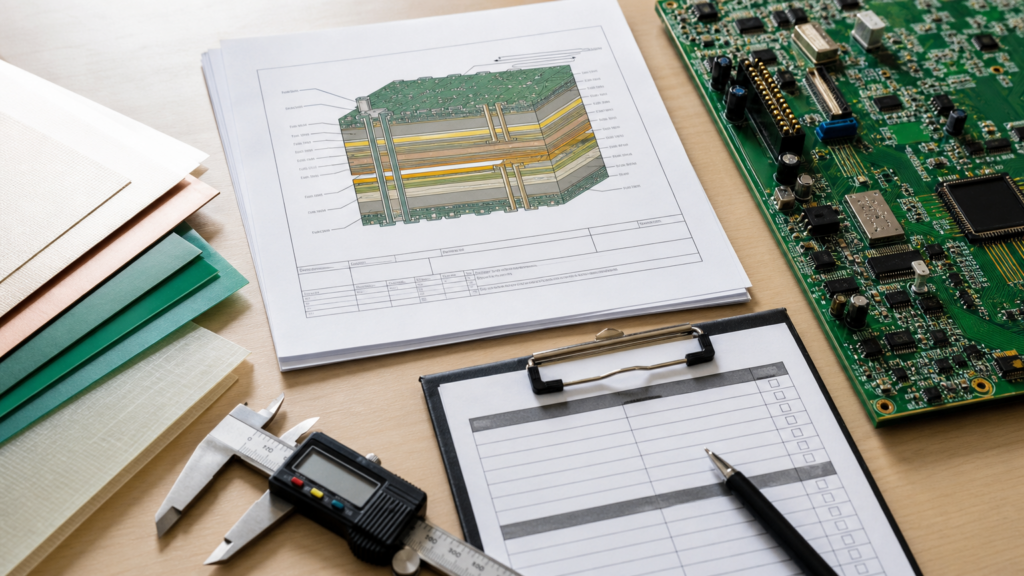
For PCX buyers, the immediate question is not whether the entire PCB market is short. The question is whether a current assembly uses a material callout that purchasing cannot easily change: FR-4 variant, high-Tg material, halogen-free requirement, low-loss laminate, controlled impedance stack-up, copper weight, thermal behavior, or customer-approved fabricator. Those details can decide whether a quote is usable or only superficially similar.
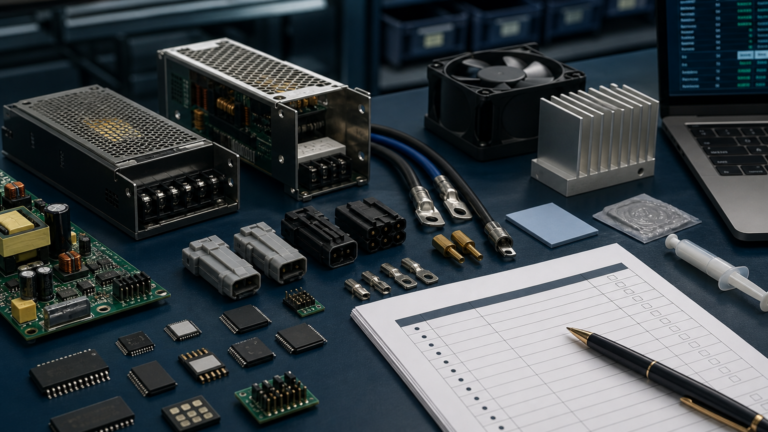
This is why laminate pressure belongs in the same file as connectors, relays, switches, inductors, power supplies, heatsinks, fans, sensors, and board-level integrated circuits. If the board cannot move, available components alone may not protect the build schedule. If the board can move but only with engineering approval, the sourcing path needs documentation early.
What the source signal supports
Evertiq’s July 13 article frames the current pressure point around PCB laminate and glass fabric, with AI hardware demand adding stress to the materials discussion. That supports a buyer-watch note, not a broad forecast. The article does not give PCX a basis to claim that a specific customer’s board will be delayed, that a specific material will be unavailable, or that all laminate classes face the same sourcing risk.
The useful sourcing action is to classify the exposure. Standard boards with flexible approved fabricators should be handled differently from high-layer-count, impedance-controlled, high-frequency, thermal, automotive, medical, aerospace, or long-life industrial assemblies where qualification is narrower. Treat the material signal as a reason to ask better RFQ questions, not as a reason to rewrite the BOM without engineering input.
Build the material equivalency packet first
Before an RFQ becomes urgent, confirm whether the drawing allows equivalent material families or requires an exact laminate. Check whether the fabricator has already qualified alternates, whether customer approval is needed, and whether the test and documentation package changes if a substitute material is proposed. If the design includes controlled impedance, high-speed links, RF sections, heavy copper, high temperature, or strict reliability requirements, make those constraints visible at the beginning of sourcing.
The review packet should also name what does not change. If the approved stack-up depends on a particular dielectric constant, dissipation factor, glass weave, resin system, UL file, flammability rating, solder profile, or thermal requirement, those details belong in the RFQ notes. That prevents a sourcing team from comparing a compliant offer with an offer that looks available but would force a redesign, customer waiver, or reliability review.
Separate board-material risk from component risk
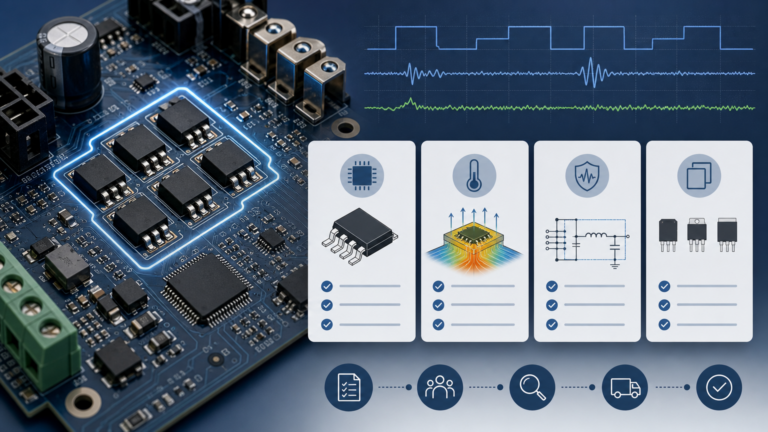
Procurement teams should separate board-material risk from component risk. A BOM review may show that passives, connectors, power components, semiconductors, and electromechanical parts are manageable while the board itself is the gating item. The reverse can also be true. Either way, the strongest sourcing file is the one that shows which constraints are engineering limits, which are customer-approval limits, and which are purchasing preferences.
This distinction also protects traceability. If a supplier proposes a different laminate, the review should state whether the change affects electrical performance, thermal behavior, regulatory documentation, customer approval, or the inspection plan. Buyers do not need to become PCB design engineers, but they do need enough file discipline to know when a material change is a purchasing substitution and when it is an engineering change.
Where PCX can help
PCX can help buyers review exact part requirements and documentation paths before the RFQ window gets tight. If a build depends on specific board-level components, approved alternates, or sourcing documentation, send the exact lines through the PCX RFQ form. For sourcing scenarios where substitutions or unfamiliar offers appear, the PCX Star Quality Program is the right frame: verify documentation, traceability, inspection expectations, and supplier discipline before treating an offer as viable.
The buyer takeaway is practical. PCB laminate pressure should not trigger a blanket buy-ahead decision. It should trigger a stack-up and approval review for assemblies where the board material, the approved fabricator list, or the qualification file can slow down the whole build.