

Before Memory Substitutions Reach Purchasing, Check The Qualification File
When memory markets tighten, the first useful purchasing action is not a panic buy. It is a qualification-file check: which memory devices, embedded-storage parts, modules, controllers, and support components are already approved, and which substitutes would require engineering or customer review before they can be used.
That is the practical reading of two recent source-watch signals. TrendForce’s memory-wall analysis connects AI compute growth with demand for HBM and DDR5, and describes pressure that can spill into the wider memory ecosystem. Evertiq’s May 8 report, covering Nikolaos Florous of Memphis Electronic’s Evertiq Expo Zürich presentation, argues that memory should no longer be treated as a simple commodity category under old buying assumptions.
The decision buyers are really making
The immediate decision is not “buy more memory.” It is whether the company knows, before urgency arrives, which memory substitutions are actually usable. A DRAM, NAND, eMMC, UFS, or module quote can look acceptable commercially while still failing the build because the device is not on the approved vendor list, needs firmware validation, changes thermal behavior, or lacks the documentation required by the customer.
That is why the qualification file deserves attention early. The file should tell purchasing which manufacturer part numbers are approved, which alternates are acceptable only for certain assemblies, which date-code or packaging restrictions apply, and which substitutions require engineering, quality, or customer signoff.
What this means for PCX buyers
For PCX buyers, the memory signal should become a controlled review of approved purchasing options. The relevant categories may include PCX’s memory component category, but the exposure often extends into integrated circuits, controllers, power-management devices, connectors, and passives that were validated around a particular memory configuration.
The sourcing risk appears when a line-down schedule meets an incomplete qualification record. At that point, the buyer may have quotes in hand but no clean answer on interchangeability, traceability, inspection expectations, or customer approval. Reviewing those constraints before an urgent buy keeps the sourcing conversation practical and reduces the chance that speed outruns verification.
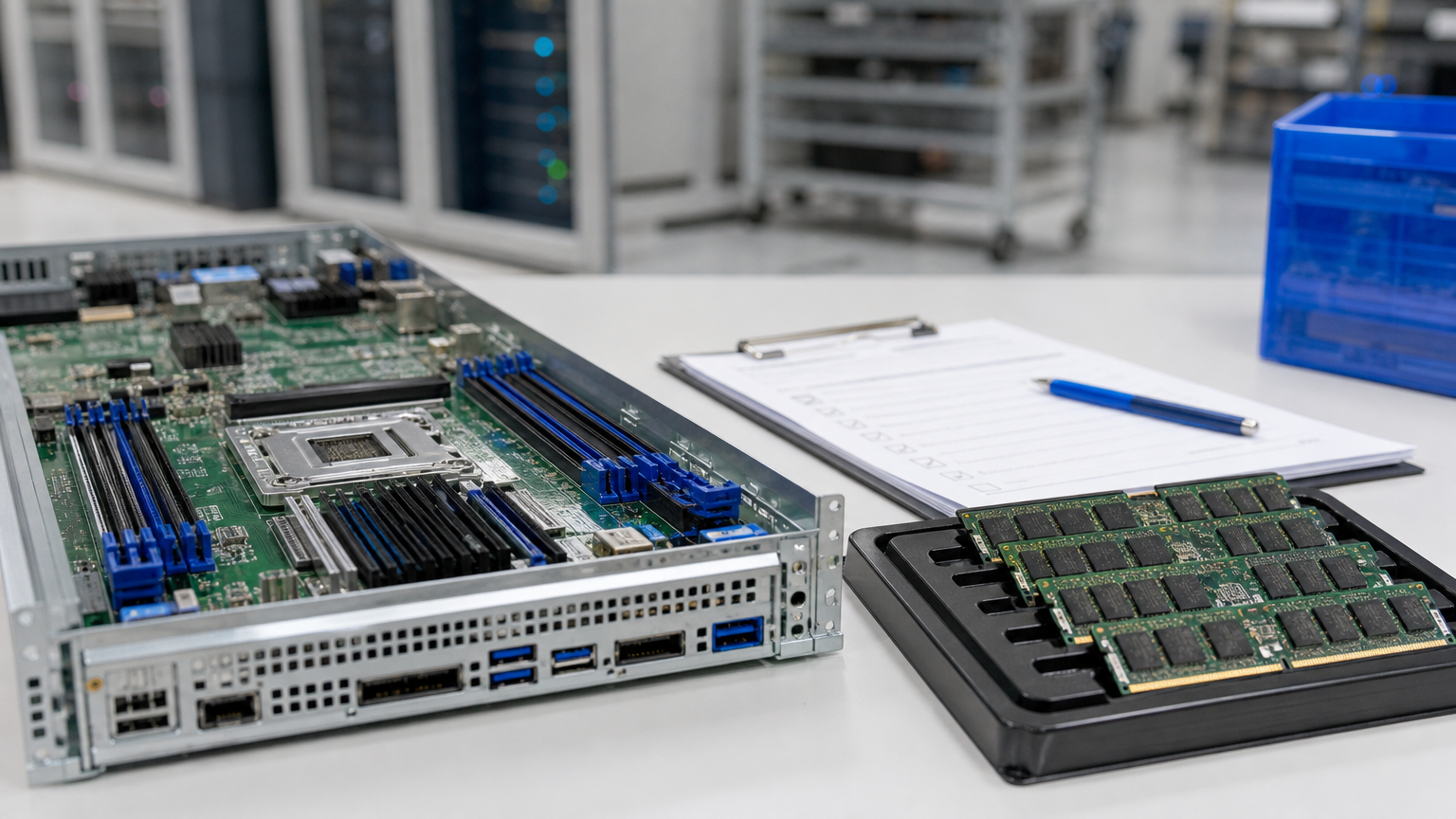
The qualification-file checklist
A memory-market signal becomes useful when it produces a short, specific checklist. The checklist should live close to purchasing, engineering, and quality, not only in an old design folder.
- Approved manufacturer part numbers, including any assembly-specific restrictions.
- Validated alternates and the tests, firmware checks, or customer approvals behind them.
- Package, density, speed-grade, temperature, date-code, and lifecycle limits that purchasing must not override.
- Open orders, scheduled releases, safety stock, and demand changes for the least flexible memory lines.
- Inspection, documentation, and traceability expectations for any nonstandard sourcing option.
This is a narrower action than a broad market forecast. TrendForce and Evertiq support the need to pay attention to memory-market structure and AI demand, but they do not prove that every memory line on a buyer’s BOM is constrained. The safe buyer action is to identify where a substitution would be difficult before the team is forced to decide under pressure.
What not to infer from the market signal
Buyers should avoid turning a memory-supercycle headline into an unsupported claim about every price, lead time, or allocation position. Some lines may remain obtainable through normal channels. Others may become sensitive because of specific density, package, lifecycle, or customer requirements. The useful distinction is part-level exposure, not category-wide alarm.
It is also important to separate a quote from an approved build option. A supplier may be able to offer a part that appears technically close, but “close” is not the same as qualified. If firmware behavior, timing margins, temperature range, documentation, or customer approvals matter, purchasing needs those answers before committing to the buy.
How to turn the check into an RFQ
A stronger RFQ includes more than a part number and target price. It should identify the approved manufacturer list, acceptable alternates, required documentation, date-code restrictions, package needs, urgency, and whether the part can be sourced through standard channels or may require broader market search.
If a memory-bearing assembly is exposed, buyers can send PCX the approved parts list and constraints for sourcing support. PCX can help review available options without treating speed as a substitute for documentation, inspection, or qualification discipline.