
Lattice-AMI Deal Puts FPGA Firmware Context Into the BOM Review
Lattice Semiconductor’s agreement to acquire AMI is not a component shortage story. It is a useful signal for buyers who source FPGAs, logic devices, controllers, and other board-level components in systems where the device, platform firmware, and management software increasingly travel together.
Evertiq reported that Lattice plans to acquire AMI in a USD 1.65 billion deal, bringing together Lattice’s low-power FPGAs with AMI’s platform firmware and infrastructure-management solutions for cloud and AI. Data Center Dynamics also covered the transaction, describing the same cash-and-stock deal and the planned combination of Lattice FPGA technology with AMI firmware used in data-center and management environments.
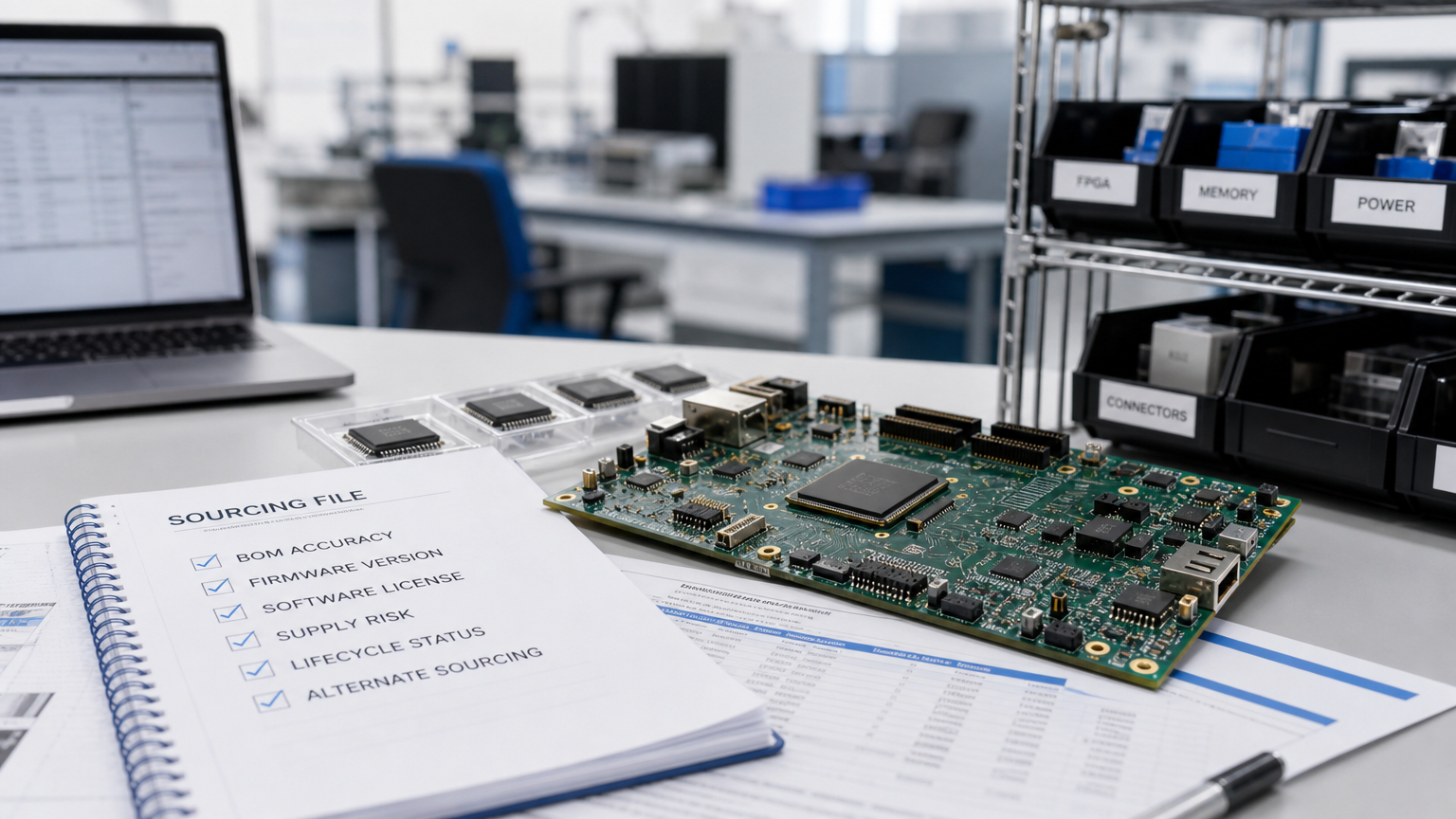
For sourcing teams, the practical question is not whether this transaction changes today’s lead time for a specific FPGA. The better question is whether the BOM file is detailed enough when a programmable logic device depends on firmware version, management stack, security posture, or approved platform configuration.
The market signal
The signal is that programmable logic is being positioned less as a stand-alone silicon line and more as part of a management-and-control platform. Lattice and AMI are both relevant to systems where uptime, remote management, secure control, and deployment confidence matter. That is especially true in cloud, AI infrastructure, communications, industrial, and embedded applications.
This does not prove near-term scarcity. It also does not mean a buyer should treat every Lattice, AMI, FPGA, or platform-management line as constrained. The useful reading is more disciplined: when device vendors combine silicon, firmware, and management capability, purchasing records should capture more than a manufacturer part number.
What this means for PCX buyers
For PCX buyers, the sourcing file should make clear whether the requested line is just an integrated circuit or whether it is tied to a larger approved platform. A low-power FPGA on a board may be replaceable only within limits. Firmware dependencies, boot behavior, security-management requirements, and customer qualification rules can all affect what counts as an acceptable sourcing option.
This matters most when procurement is asked to move quickly. A quote may match the top-level device family while still leaving open questions about package, speed grade, lifecycle status, programming state, revision, or approved source. In those cases, speed without documentation can create engineering rework later.
PCX’s integrated circuits category is the natural component-family context for FPGA and logic sourcing, while the company’s quality and traceability process is relevant whenever a buyer needs evidence to support a controlled sourcing decision.
Component families to watch
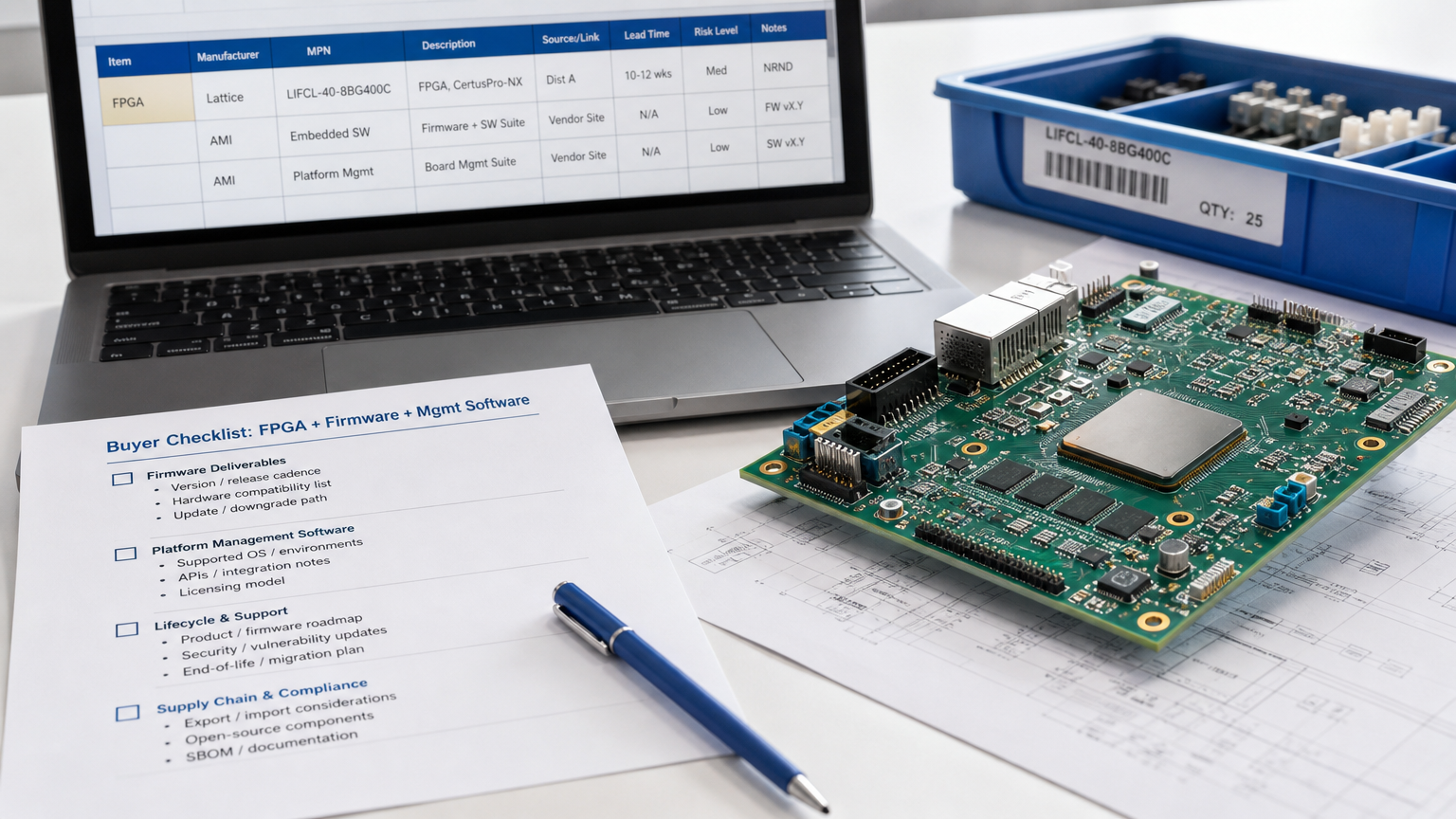
The immediate family is programmable logic: FPGAs, companion logic, controllers, platform-management ICs, and board-level devices that sit near server, communications, industrial, or embedded control functions. Depending on the design, related BOM lines can include power management ICs, memory, connectors, clocks, discrete semiconductors, thermal parts, and security-sensitive support components.
The risk is not identical across those families. Some lines may be ordinary replenishment items. Others may be tied to approved firmware, a qualified board revision, or a customer-controlled configuration. Buyers should separate those categories before assuming an alternate source or substitute is acceptable.
What is stable versus tightening
The inspected sources support a business and technology-positioning signal, not a universal shortage conclusion. They do not establish broad allocation, price movement, or immediate delivery risk for FPGAs. That distinction should stay visible in the sourcing conversation.
What may be tightening is the margin for vague purchasing records. As platform-management requirements become more central to AI and data-center systems, the acceptable sourcing option may need to match more attributes: exact MPN, package, speed or temperature grade, lifecycle status, firmware relationship, programming expectation, and supporting documentation.
Forecast and scheduled-order questions
For current builds, buyers should identify which programmable logic and platform-management lines are single-source, customer-approved, or difficult to substitute. For future builds, the forecast question is not simply quantity. It is whether the build plan depends on a particular device revision, programmed state, firmware bundle, or management controller relationship.
That review can change how the RFQ is written. Instead of asking only for availability on a part number, include package, grade, lifecycle status, acceptable alternates, documentation requirements, and any notes about programmed or customer-approved configurations. The clearer the request, the easier it is to reject a superficially similar but unsuitable quote.
Quality and sourcing discipline
When the sourcing path moves beyond the simplest approved channel response, quality discipline becomes part of the buyer’s schedule protection. Documentation, condition, traceability expectations, date-code rules, packaging requirements, and inspection steps should be stated before urgency turns into a rushed purchase.
That does not mean every open-market option is wrong. It means each option has to be evaluated against the actual build requirement. For FPGA, logic, and platform-management lines, a controlled sourcing file helps procurement, engineering, and quality discuss the same evidence.
PCX buyer takeaway
The Lattice-AMI deal is a reminder that some BOM lines carry software and platform context even when they appear in purchasing systems as ordinary electronic components. Buyers should not overreact to the headline, but they should use it as a prompt to tighten sourcing files around programmable logic and management-control devices.
If your team is reviewing FPGA, logic, controller, or other board-level IC exposure, request a quote from PCX with the full sourcing requirements: exact MPN, approved alternates, documentation needs, timing, quantity, and any engineering constraints that affect what can be supplied responsibly.