
Why the Future is So Bright for Lidar
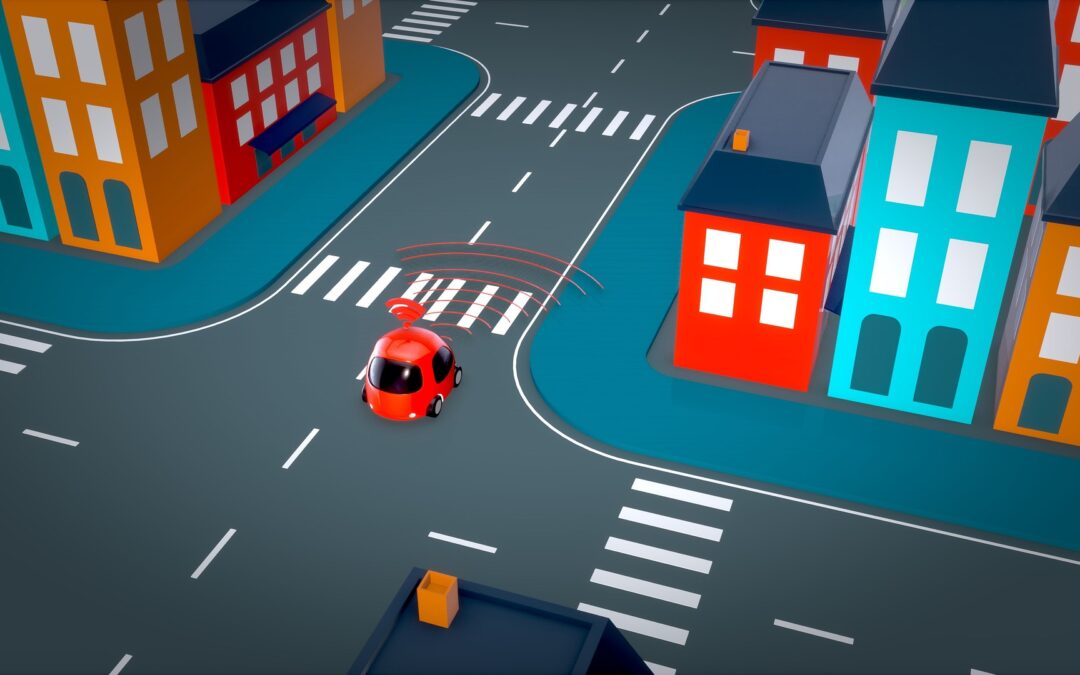
If you’ve ever wondered what that camera-like beacon is on the top of a self-driving car–it’s lidar. Lidar stands for light detection and ranging. The self-driving vehicle scans the area in a 3D map to get you from point A to point B using the speed of light. Basically, the lidar scanner uses a short pulse of light to measure the vehicle’s surroundings and calculate the three-dimensional information to drive itself along any route you map. The Wall Street Journal states, “Companies are plowing billions of dollars into autonomous technologies they hope will improve efficiency and solve worker shortages.” What does this truly mean for a more autonomous world?
The Driverless Car Market
The autonomous (driverless) car market was valued at USD 22.22 billion in 2021. The market is expected to reach USD 75.95 billion by 2027 while registering a CAGR of 22.75% during the forecast period 2022-2027. While most industries are looking for ways to increase productivity to meet supply and demand better, can autonomy be the answer?
Lidar and COVID-19

The COVID-19 pandemic has impacted the automotive sector, compelling automakers to reduce the output at their production plants. The pandemic has also affected the operations of many OEMs, ranging from production to R&D, and created short-term disruptions that have delayed autonomous cars’ deployment and rollouts. Due to increasingly stringent government regulations focusing on increasing road safety, more autonomous vehicles are being developed with highly advanced technologies integrated with smartphones, creating opportunities for market players to attract customers. The recent technological advancements in artificial intelligence, machine learning, and other sensors like RADAR, LIDAR, GPS, and computer vision, have enabled manufacturers to increase self-driving capabilities in cars. But can they keep up with production when other industries are employing lidar?
Automotive Industry Impact of Lidar
Level 2 and Level 3 autonomous cars are the most prominent in the market, while Level 4 and Level 5 (as scaled by SAE) are expected to reach wider acceptance by 2030. As a result, the growth of these Level 2 and Level 3 cars is expected to propel the market during the forecast period. North America is expected to play a significant role in the market, followed by Asia-Pacific and Europe. Major automaker companies, technology giants, and specialist start-ups across North America have started investing in developing autonomous vehicle (AV) technology. As demand for self-driving cars is picking up across countries like China, Japan, India, and South Korea, the Asia-Pacific region is also expected to witness growth over the forecast period.
Big Trends in Lidar
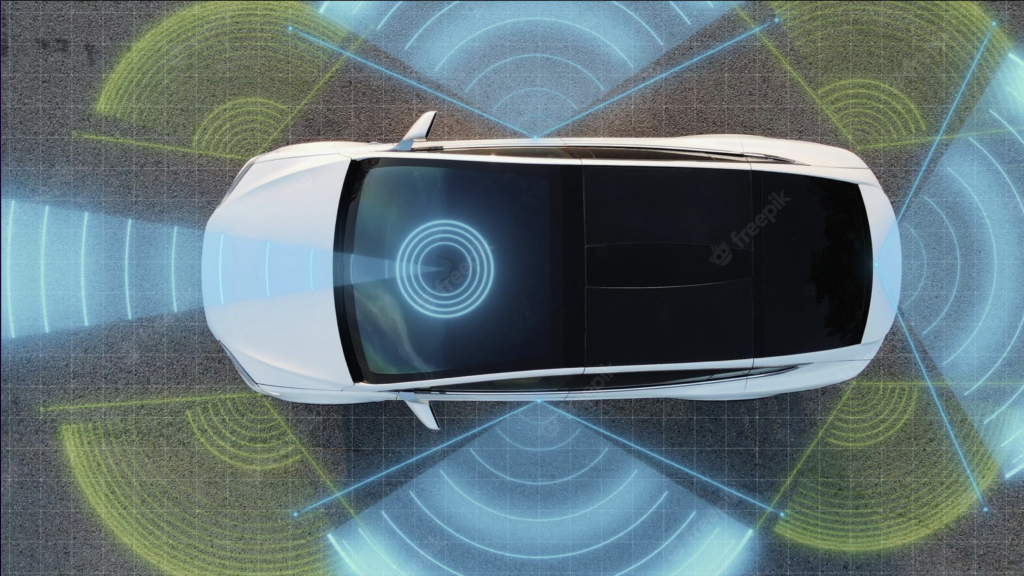
With the advancements in the automotive industry, many believe that adaptive lidar will make its way to rail, trucking, construction and mining industries. However, some companies are concerned about intelligent transportation systems using wireless signals that could be interrupted. In that case, you may see more job opportunities for ‘autonomous specialists’ who will intervene in the event of an unforeseen obstacle.
Regardless of your stance on autonomous software, the three-dimensional world of lidar will continue to grow. CTO and founder of Lumotive, Gleb Akselrod, explains, “One of the big trends that we see in lidar is the drive to higher levels of integration enabled by semiconductor technologies, and the move away from discrete and mechanical components, which brings down the cost of lidar.” Companies are investing more in themselves to fight the semiconductor supply chain issue brought on by COVID, which is why the integration of lidar in various industries is so critical to today’s market when it comes to solving manufacturing problems.
Need more insight? Stay on trend in the semiconductor industry with PCX.