
Collins Aerospace’s Largo Expansion Puts Security-Sensitive BOM Files Back In Focus
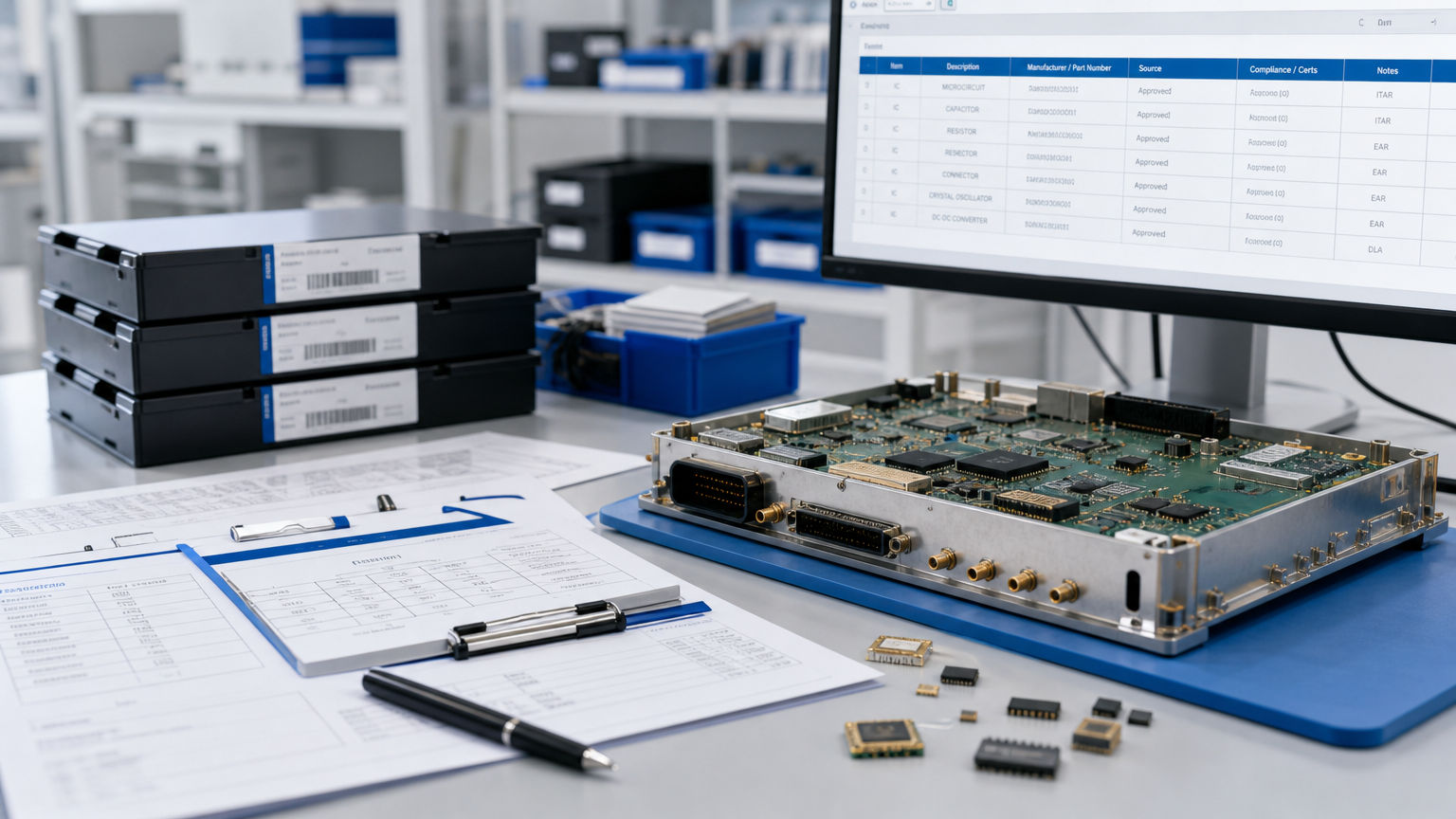
Collins Aerospace’s planned expansion in Largo, Florida is a useful PM signal for electronics buyers, but not because it suddenly changes component availability. The better reading is narrower: when production involves radar, satellite, secure communications, and other defense-adjacent electronics, sourcing teams need cleaner BOM files before urgency reaches the RFQ stage.
Evertiq reported on May 18 that Collins Aerospace, an RTX business, is investing $26.5 million to expand its Largo facility. A related RTX announcement distributed through PRNewswire described the site as part of the company’s production base for commercial aviation radars and multi-domain security solutions.
What changed
The public announcement says the Largo facility plays a role in production of radars, satellite and secure communications components, and testing for commercial and military customers. It also says the investment is intended to accelerate production and add more than 100 skilled roles across engineering and factory operations.
Those are meaningful production details. They do not, by themselves, say that any specific integrated circuits, connectors, passive components, power management devices, relays, switches, sensors, memory, or discrete semiconductors are easier to buy this quarter. For procurement teams, the event is best treated as a documentation and program-ramp signal rather than a broad market-availability claim.
What this means for PCX buyers
For PCX buyers, the practical signal is that security-sensitive assemblies make the sourcing file more important than usual. A standard MPN may identify the component, package, and electrical function. It may not capture whether a quoted part is acceptable for the program, which date-code or lot evidence matters, which alternates are already approved, or when engineering and quality need to sign off before purchasing moves.
That matters for board-level electronics such as integrated circuits, high-reliability connectors, analog and power management ICs, memory, FPGAs, microcontrollers, discrete semiconductors, and electromechanical parts. If one of those lines supports a secure communications, radar, satellite, aerospace, or industrial-control assembly, buyers should expect more evidence discipline than a normal price-and-lead-time comparison.
PCX can support that conversation when the sourcing request includes the decision rules up front. The RFQ is stronger when procurement shares approved manufacturers, approved alternates, lifecycle restrictions, required documentation, inspection expectations, and any customer or program constraints before the search begins.
Why secure-communications assemblies need cleaner sourcing files
Secure-communications and aerospace electronics can put ordinary component categories into a higher-control sourcing context. A connector may need a specific ruggedization profile. A power management IC may be tied to a tested board revision. A memory device, logic IC, sensor, or microcontroller may require careful substitution review before an alternate can be used. Even passive components can matter when environmental rating, tolerance, packaging, or lot consistency is important.
This is where the sourcing file earns its place. It should help a buyer separate three questions that often get mixed together during urgency: is the part commercially available, is the quoted source acceptable, and is the part acceptable for this assembly? A quote can answer the first question without answering the other two.
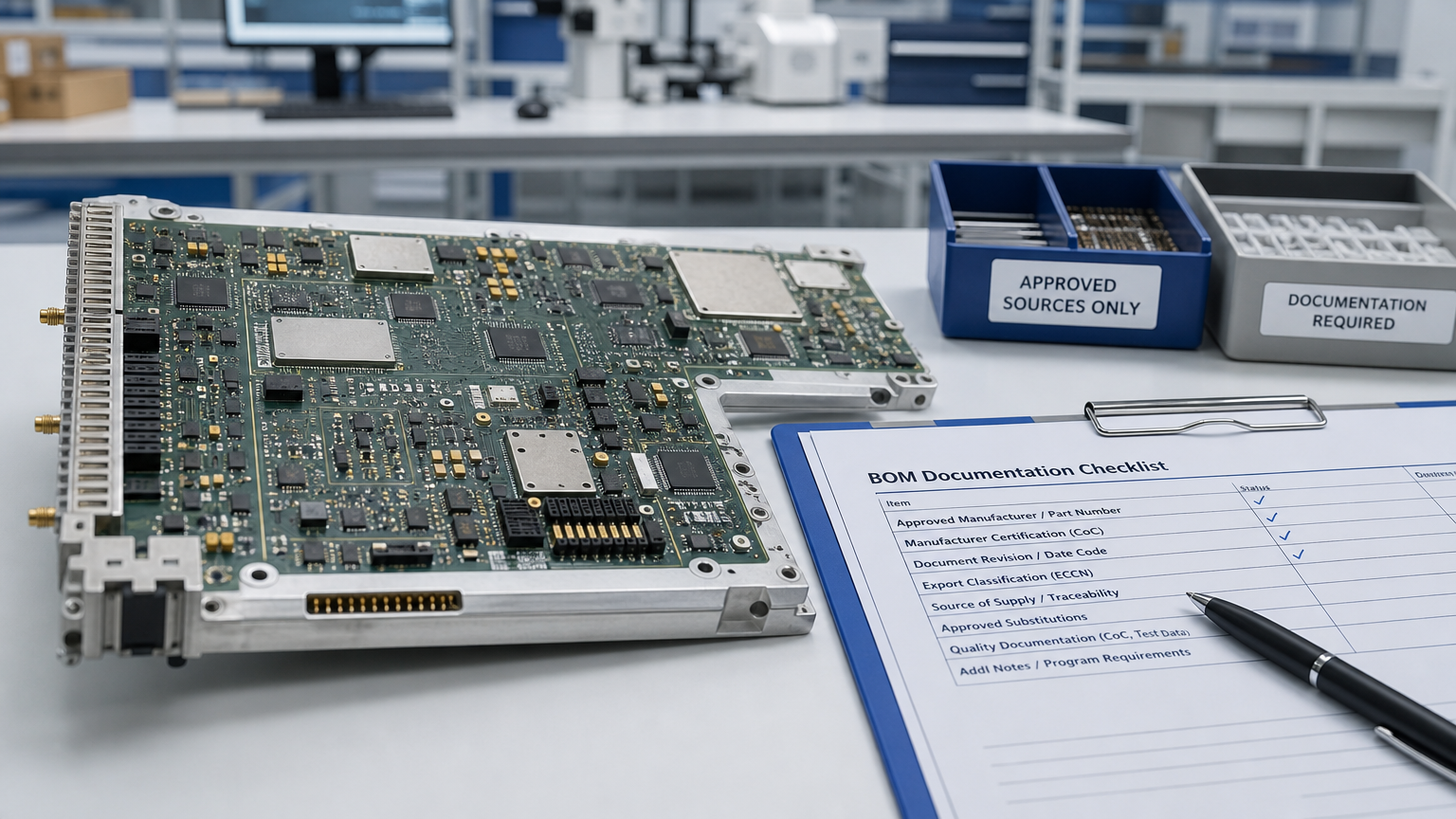
For security-sensitive work, useful file elements often include the approved vendor list, approved manufacturer list, last acceptable revision, packaging and date-code preferences, required certificates or inspection evidence, known alternates, no-substitution lines, and escalation contacts. Those details do not replace engineering judgment. They reduce ambiguity when sourcing speed and quality discipline both matter.
What not to assume from the announcement
The Collins Aerospace announcement should not be stretched into a component-market conclusion. It does not support claims about general lead-time relief, lower pricing, allocation easing, or open-market availability for specific board-level parts. It also does not tell buyers which suppliers or manufacturer part numbers may see changing demand.
That restraint matters. Capacity and production news can create a useful watch point, especially in aerospace, defense, satellite, industrial, and communications programs. But procurement still has to check the exact BOM exposure. A facility expansion can increase production capability for a manufacturer while individual lines on a customer BOM remain constrained, obsolete, single-sourced, or documentation-sensitive.
It is also important not to treat quality language as a shortcut. PCX’s Star Quality Control Program and certification and quality context are useful because urgent sourcing requires disciplined review, not because any distributor process removes the need for buyer, engineering, or program-level approval.
A practical file check before the next RFQ
Before sending a security-sensitive or aerospace-adjacent BOM line into the market, buyers can reduce rework by asking five file questions:
- Approval: which manufacturers, alternates, packages, revisions, and sources are already acceptable?
- Evidence: what documentation, traceability, certificates, inspection data, or packaging details must accompany a quote?
- Substitution: which lines are no-substitution, and which alternates require engineering, quality, or customer review?
- Lifecycle: are any devices near end-of-life, last-time-buy, or redesign review?
- Urgency: which shortages would justify a controlled open-market search, and who approves the path before purchasing commits?
That checklist is intentionally practical. It applies to integrated circuits, connectors, power components, memory, passives, discretes, relays, switches, sensors, and other board-level categories where a part can be physically available but still not acceptable for the assembly. Buyers who are already reviewing integrated circuits or other controlled BOM lines should make those rules visible before the sourcing request leaves the building.
Where PCX fits
PCX’s role is not to turn a facility expansion into a market forecast. The useful role is to help buyers translate a sourcing need into a disciplined component search: exact MPNs, acceptable alternates, documentation requirements, quality expectations, and realistic timing. When a buyer is ready to test availability for controlled lines, PCX can review the requirement and request a quote with the right sourcing context attached.
The practical takeaway from the Collins Aerospace signal is simple: security-sensitive production news should prompt a file review before it becomes an urgent buy. Availability, verification, and timing all improve when the sourcing file is ready before the market search starts.