
Melexis Snubber Signal: Keep Power-Stage Quote Notes Specific
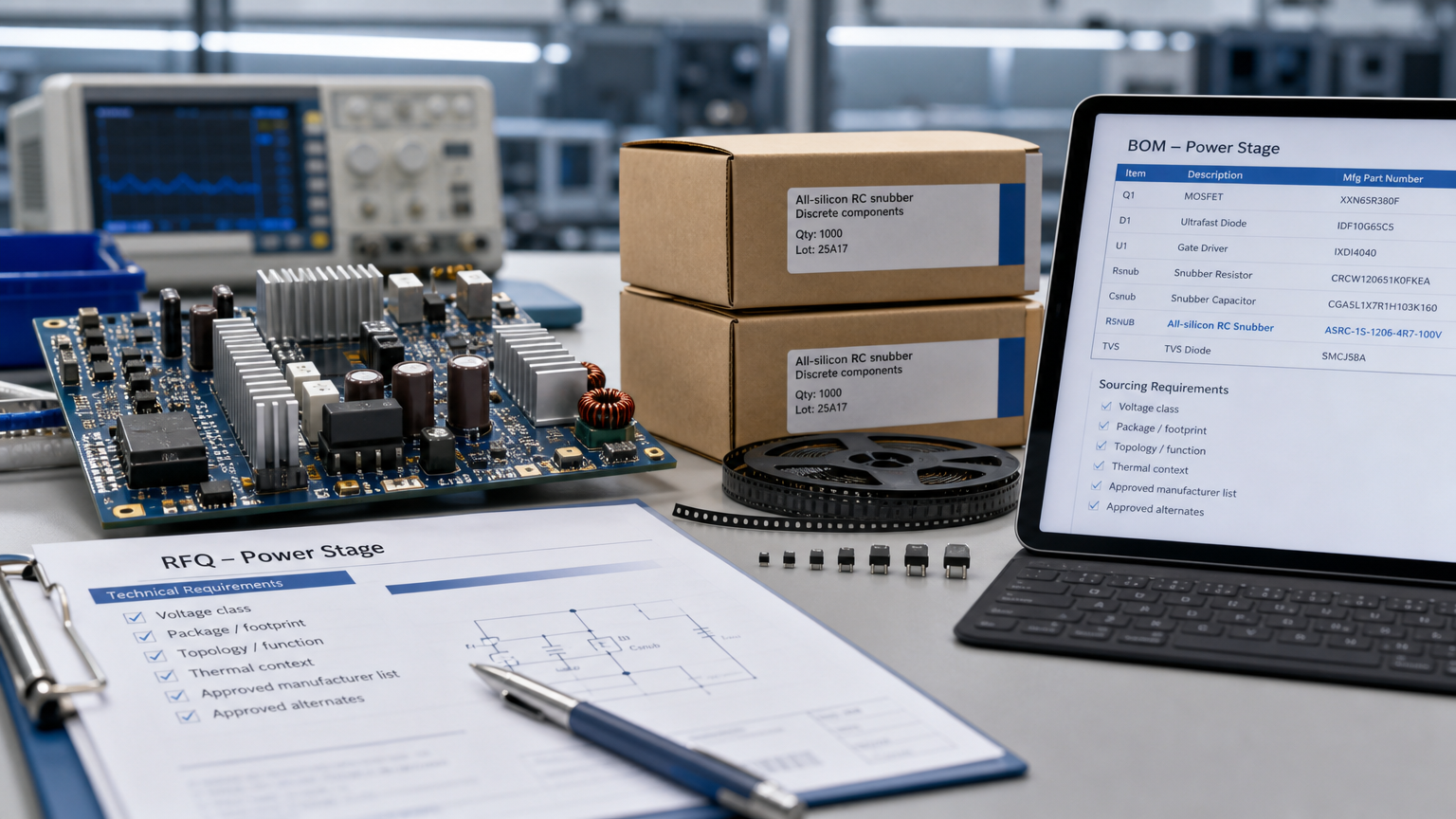
A power-stage sourcing request can fail quietly when a small support part is treated as if it were only a footprint problem. The current signal is specific: Electronic Design reported on a Melexis all-silicon RC snubber intended to reduce ringing from power MOSFETs, describing a monolithic 1,200-V silicon snubber circuit for SiC power modules used in EVs and other power applications.
That is not a market-wide shortage claim. It is not a lead-time, price, capacity, or utilization signal. For PCX readers, the value is narrower: a device-level article like this is a reminder that MOSFET-adjacent parts often carry hidden engineering boundaries that need to stay visible in the quote notes.
The device-level detail buyers should notice
The useful detail in the Electronic Design coverage is the application context around ringing, SiC modules, and power MOSFET behavior. A snubber or related support component may sit near the switching device, but it is not automatically interchangeable just because another option appears close in size or category.
When the request touches discrete semiconductors, MOSFETs, diodes, or power-module support circuitry, the first question is not “what else fits?” It is “which electrical and approval boundaries are fixed?” That changes the sourcing conversation from a generic part search into a controlled quote review.
What this means for PCX buyers
For PCX buyers, the practical signal is that quote notes should travel with the part number. A purchasing team may see one MPN. Engineering may see a voltage class, switching environment, thermal constraint, EMI concern, and qualification decision. Both views need to reach the sourcing desk before alternates are discussed.
If the line item is a passive component in an RC network, include tolerance, construction, voltage, temperature, and package constraints. If the line is an integrated silicon support device, state whether engineering will consider alternatives or whether the exact MPN is required. Those notes help prevent a small support component from becoming an uncontrolled design change.
Boundary one: voltage, package, and topology
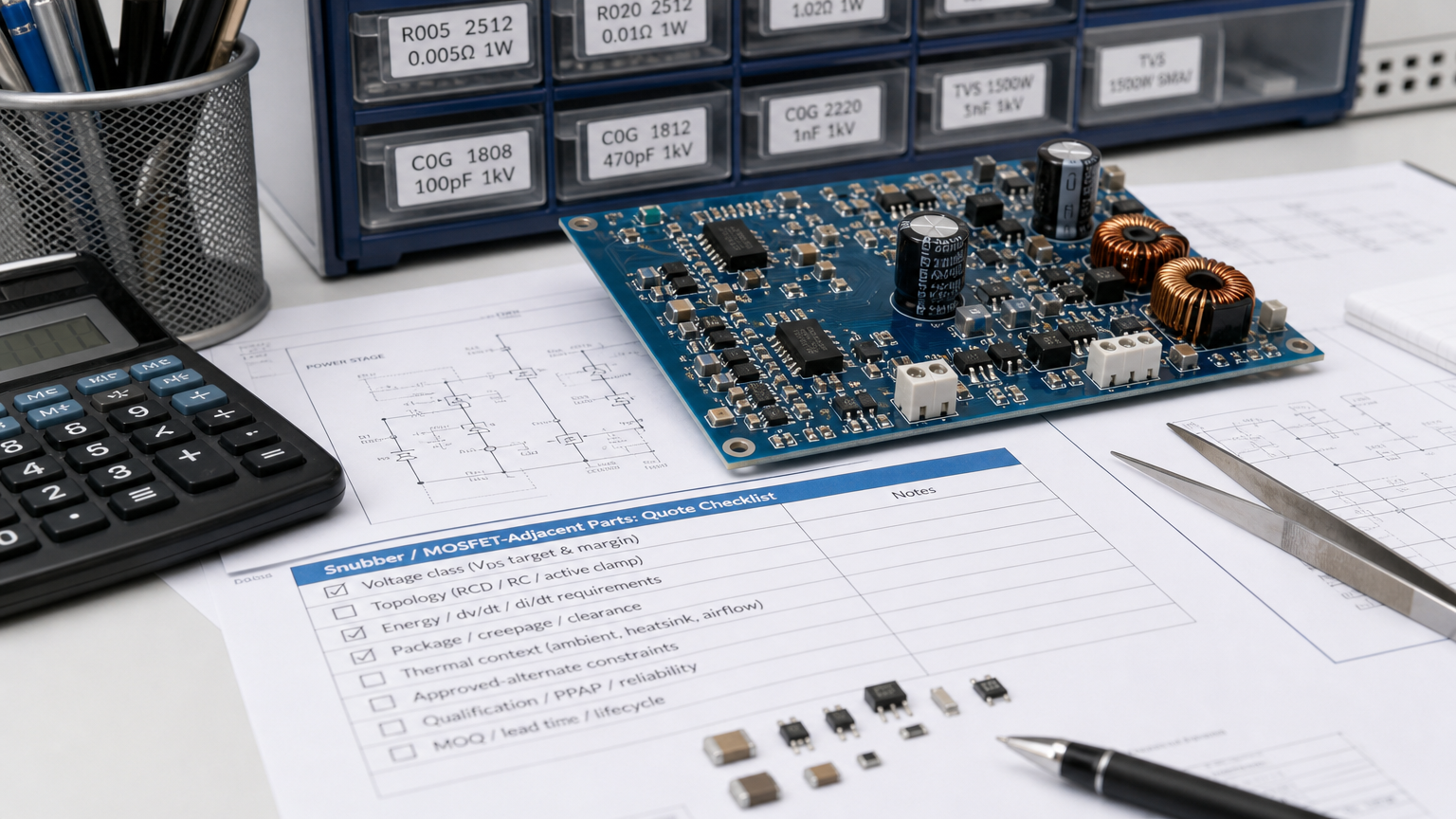
Voltage class and package are not paperwork details in a power stage. They shape whether a sourced option belongs in the same conversation as the original part. A quote request should state the required voltage range, package family, board constraints, and whether the design is tied to a specific SiC module or switching topology.
This is where buyers can save time. Instead of asking a sourcing partner to infer the design intent from the part number alone, include the boundaries that make a proposed option worth reviewing. That does not approve the alternate. It makes the first sourcing pass more useful.
Boundary two: ringing, EMI, and thermal assumptions
The Electronic Design article frames the Melexis device around MOSFET ringing. That matters because ringing, EMI behavior, parasitics, and heat are system-level concerns. A component that appears equivalent in a table may still create review work if it changes the behavior the original part was selected to manage.
Buyers do not need to turn into power-design engineers. They do need to preserve the engineering clues already available: application notes, “do not substitute” markings, approved manufacturer lists, and any previous quality or field history. If urgency pushes the search outside normal channels, keep quality and traceability expectations attached to the request.
Boundary three: approval status
Quote notes should separate exact requirements from reviewable options. “Exact MPN only,” “approved alternates attached,” and “engineering review required for any substitute” are three different sourcing instructions. Treating them as the same creates avoidable risk.
That separation is especially important for EV, industrial, medical, aerospace, data-center power, and other high-reliability or tightly qualified assemblies. The sourcing team may be able to locate supply, but approval still depends on the buyer’s engineering and quality process.
What not to infer
One public product article cannot support broad claims about MOSFET availability, SiC module supply, pricing, lead times, or allocation. It also does not show that a new snubber approach is appropriate for any particular buyer application. Those claims would require additional inspected evidence and, for application use, engineering review.
The narrower lesson is safer and more actionable: when a power-stage line item is tied to switching behavior, quote notes should make the non-negotiables visible before sourcing begins.
Turning the signal into a better request
Before sending a MOSFET-adjacent sourcing request, attach the current MPN, target manufacturer, package, voltage class, application, approved-source status, and any engineering comments on alternates. If the need is urgent, say whether the buyer wants only exact replacement, approved alternates, or options that must go back through engineering.
PCX can help buyers request a quote with those boundaries visible across discrete semiconductors, passives, and power-stage support components. The goal is not to shortcut approval. It is to keep the sourcing conversation aligned with the design risk.