
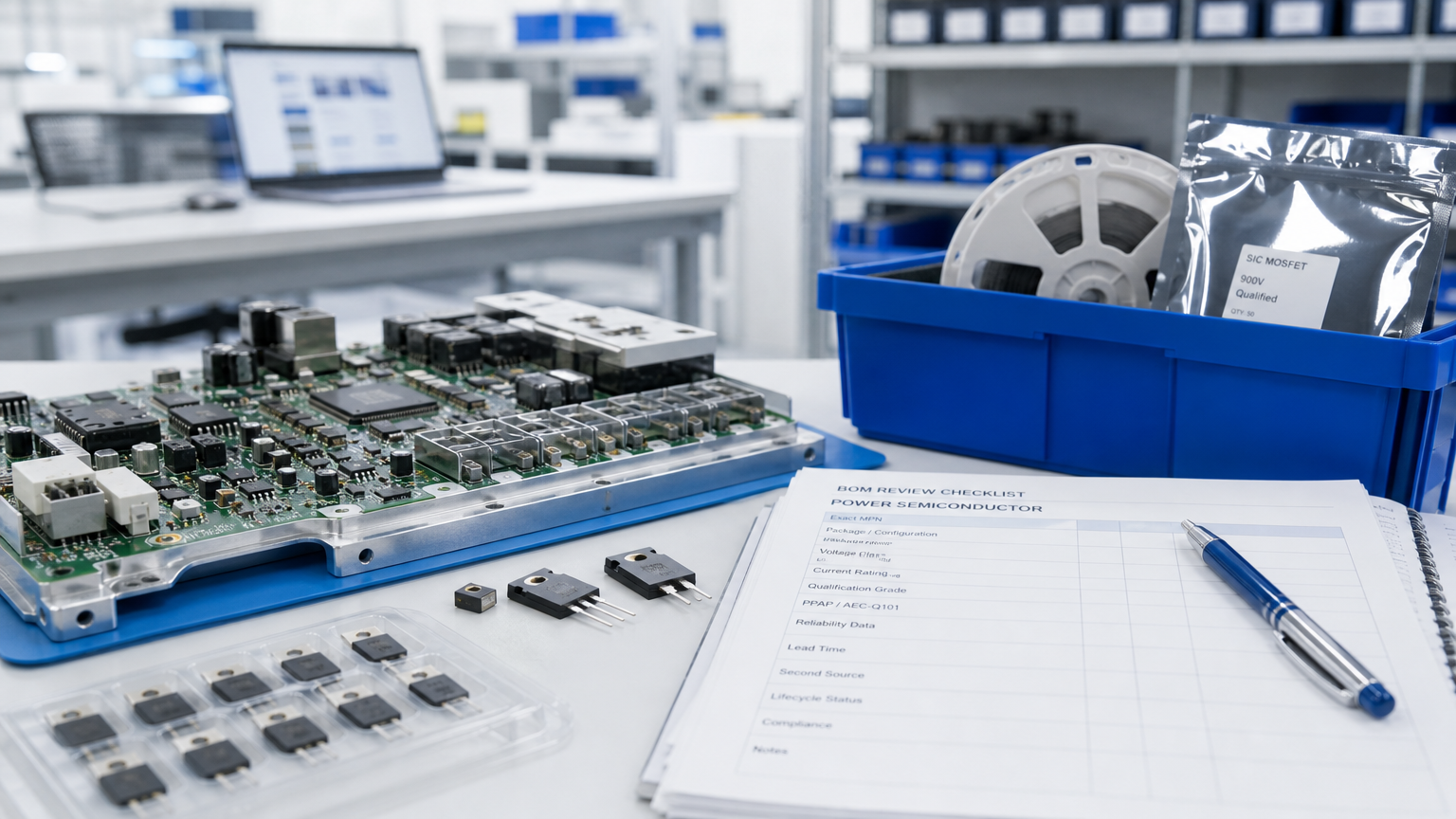
900-V EV Platforms Make SiC Sourcing a BOM-Level Review Item
Higher-voltage electric-vehicle platforms are not just an automotive engineering story. For sourcing teams, they are a reminder that power semiconductors, qualified alternates, and supporting board-level parts need to be reviewed before demand shifts become urgent purchase orders.
The current signal is specific. Electronic Design reported on onsemi collaborations tied to 900-V EV platforms and EliteSiC technology, including NIO and Geely platform activity. Semiconductor Today separately covered onsemi and Geely expanding collaboration around 900-V EV architectures and EliteSiC integration.
That does not prove an immediate shortage in every SiC MOSFET, power module, gate driver, diode, or power-management line. It does show why automotive and industrial buyers should treat high-voltage platform momentum as a BOM review trigger rather than a headline to file away.
The decision buyers are really making
The practical decision is not whether 900-V EV architecture is interesting. It is whether the parts already designed into a program, service build, or adjacent industrial product have enough sourcing resilience for the next phase of demand. Electronic Design described 900-V platforms as a move that can support faster charging, longer range, and more consistent performance by moving power through the vehicle more efficiently. Semiconductor Today made the same basic point in its Geely-focused coverage, noting the role of higher-voltage architectures and silicon-carbide power technology.
For procurement, the useful takeaway is narrower than the engineering promise. A higher-voltage platform can tighten the importance of qualified SiC MOSFETs, modules, power discretes, thermal-management choices, connectors, sensors, and related integrated circuits. The sourcing question is whether each critical line has approved alternates, known lifecycle status, usable documentation, and realistic lead-time expectations from the channels a buyer can actually use.
What this means for PCX buyers
For PCX buyers, this is a part-by-part exposure check. A platform collaboration or technology update can be useful because it shows where engineering attention is moving. It does not tell a buyer that a specific MPN is constrained, fairly priced, or safe to substitute. Those decisions still require the discipline of checking the exact device, package, voltage class, thermal requirements, qualification status, and approved manufacturer list.
That matters for automotive and industrial teams because SiC and high-voltage power paths are not casual substitutions. A replacement device may match one headline parameter and still fail the application on switching behavior, thermal performance, packaging, documentation, or customer approval. The same caution applies to supporting power-management ICs, gate-drive context, protection devices, connectors, and board-level passives around the power stage.
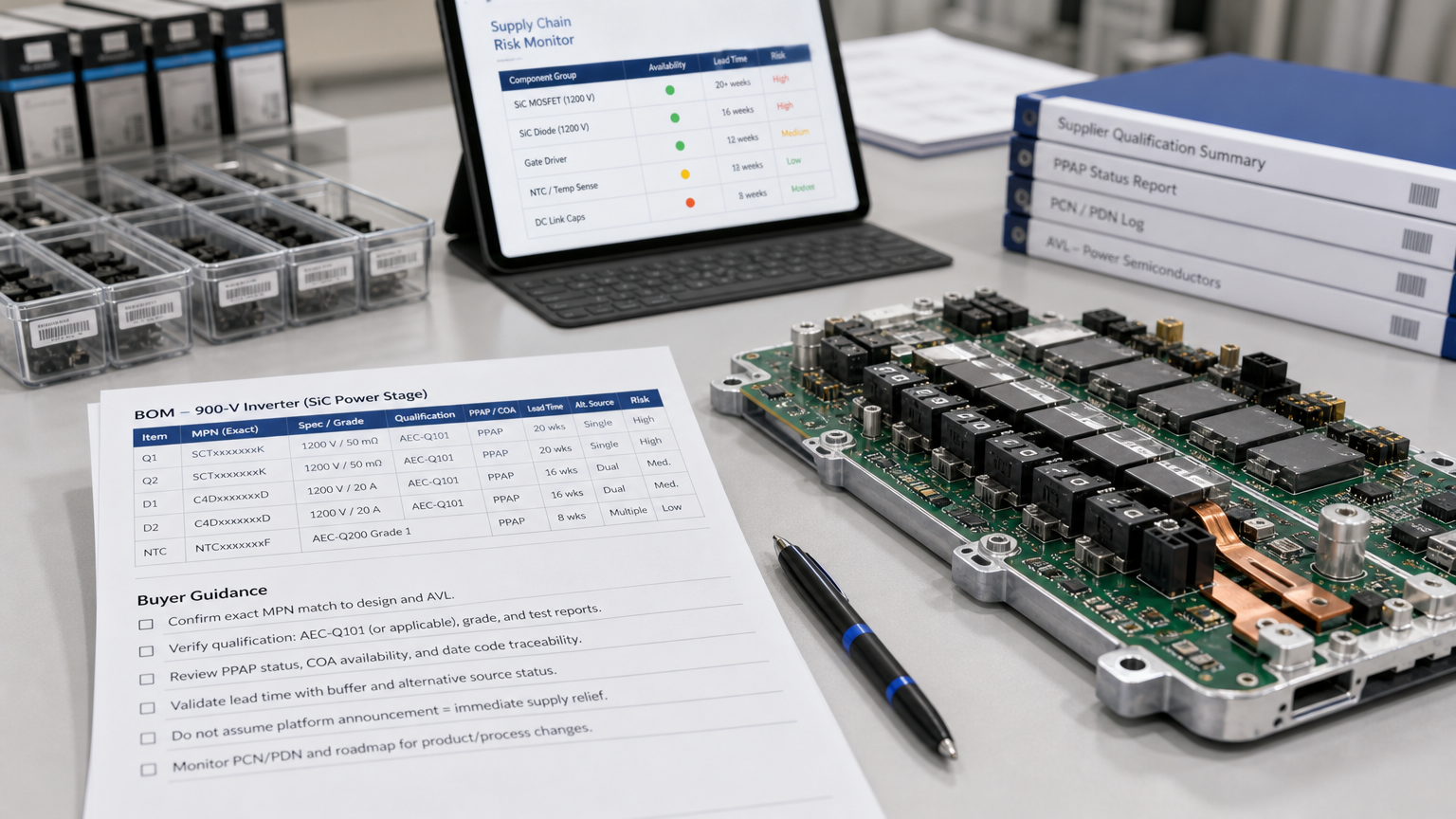
The checklist
Before a buyer reacts to 900-V EV platform news by pulling forward orders or accepting an alternate, the checklist should stay grounded in what the sources actually support and what the BOM actually requires.
- Identify the exposed part families. Flag SiC MOSFETs, power modules, power discretes, gate-drive and protection components, thermal products, connectors, sensors, and supporting ICs used in high-voltage or high-efficiency power paths.
- Separate platform direction from availability. The inspected sources support the movement toward 900-V architectures and EliteSiC use. They do not support a broad claim that every related component is short or available.
- Check qualification files before alternates. Confirm whether alternates are already approved, require engineering review, or require customer signoff before purchasing can use them.
- Review lifecycle and package constraints. A part that looks close electrically may still differ in package, thermal performance, reliability documentation, or long-term lifecycle position.
- Keep source verification visible. When urgency rises, quality review, traceability, and documentation discipline become more important, not less.
What to document before reacting
The strongest procurement response is a documented BOM view. Buyers should capture the exact MPN, manufacturer, approved alternates, open demand, current inventory, last-time-buy or lifecycle notes, customer qualification constraints, and the commercial risk of waiting. That record makes the conversation more useful whether the next step is an RFQ, a forecast update, an engineering review, or a controlled alternate-source search.
The documentation also helps avoid two common mistakes. The first is assuming that a public platform announcement creates immediate scarcity for every related part. The second is assuming that a part can be swapped quickly because the category name is familiar. Power semiconductors and adjacent high-voltage components often sit close to electrical, thermal, safety, and warranty-sensitive decisions. Procurement should not have to make those calls from a headline alone.
What to escalate
Escalate the line items where the sourcing risk and qualification burden meet. That often means single-source SiC devices, parts with limited approved alternates, designs where package or thermal performance is tightly constrained, and power-stage components tied to automotive or harsh-environment documentation. It can also include older service builds where the original device is mature, the replacement path is unclear, or the approved vendor list has not been refreshed.
PCX can support that kind of review by helping buyers look at exact part numbers, available sourcing paths, documentation requirements, and responsible alternatives without treating the open market as a shortcut around verification. For high-voltage power designs, speed only helps if the sourcing path still respects qualification and traceability.
How to turn the checklist into an RFQ
A useful RFQ for this kind of signal should include the exact part number, acceptable manufacturers, date-code or documentation needs, target quantity, timing, and whether alternates are allowed or require review. If the part is tied to a high-voltage EV, industrial power, charging, inverter, or service application, include that context so the sourcing conversation does not become too generic.
The practical signal for buyers is simple: 900-V EV activity is worth watching because it can concentrate attention on qualified SiC and power-device supply paths. It is not a reason to panic buy or relax verification. If a high-voltage power BOM has exposed lines, buyers can use the PCX parts request form to start a focused review of sourcing options, documentation needs, and timing.