
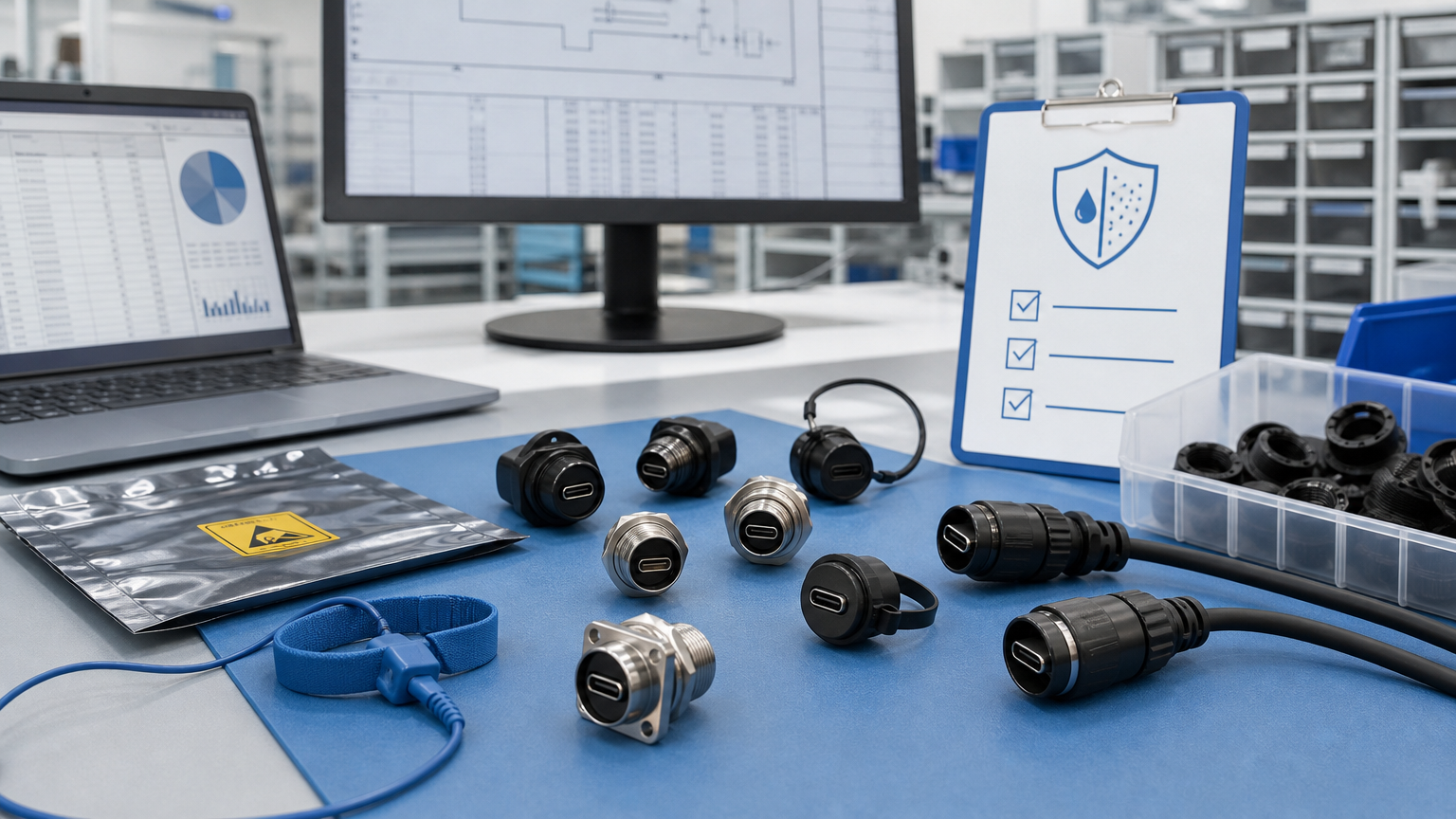
Rugged USB-C Connectors: A Qualification Checklist for Harsh-Environment BOMs
Rugged connector coverage does not have to point to a shortage to matter to buyers. It can still be a useful reminder that connectors are board-level decisions, and a connector substitution is rarely just a footprint question. A waterproof USB-C receptacle, a sealed cable assembly, or a push-pull connector for a harsh environment may look like a simple line item until engineering, quality, and procurement have to prove that it fits the actual application alongside related switches, relays, cables, and enclosure details.
Recent component coverage shows that USB-C and waterproof connector options are continuing to move into more demanding environments. Electronic Design described rugged USB-C connectors as a way to extend USB-C into applications where water, dust, and mechanical exposure matter. Electronics Sourcing separately covered waterproof push-pull connectors with IP67 and IP68 ratings for marine, industrial, medical, automotive, and data/communications uses.
The practical signal for buyers is restrained: do not assume that a connector family name, a similar shell, or a familiar interface makes a part interchangeable. Treat rugged connectors as application-qualified items, especially when the part sits in an outdoor, industrial, transportation, marine, or high-reliability build.
What changed for rugged connector sourcing
USB-C is widely recognized because it appears across consumer and commercial devices, but ruggedized versions carry extra design and sourcing questions. Electronic Design’s coverage points to waterproof USB-C options with environmental ratings such as IP67 and IP68 and notes that these variants can extend where USB-C can be used. That is useful context, but it should not be stretched into a broad market conclusion. It does not prove that every rugged connector is constrained, interchangeable, or available on the same timeline.
Electronics Sourcing’s push-pull connector coverage is also a useful reminder that harsh-environment connectors are specified through multiple variables: pin counts, sizes, keying options, mounting styles, bend reliefs, cable protection, and exposure to moisture, dust, vibration, and temperature variation. Those details are not decorative. They decide whether a candidate part belongs on the approved list or stays a catalog curiosity.
What this means for PCX buyers
For connector buyers, the first question is not simply whether a supplier can quote a part that looks close. The first question is whether procurement has the constraints that engineering and quality will use to accept or reject the part. That includes the exact MPN, mating connector, cable or panel-mount requirement, environmental rating, current and signal needs, materials, plating, agency or customer documentation, and any approved alternate list.
The USB-IF compliance program adds another useful boundary for USB products. USB-IF says its compliance program uses test specifications and Test IDs to evaluate products, and it states that products seeking USB-IF certification are required to use USB-IF certified connectors. PCX should not turn that into a legal or certification guarantee for any lot. The sourcing lesson is simpler: if a product depends on a named interface or certification posture, buyers should preserve that requirement in the RFQ and in the qualification file.
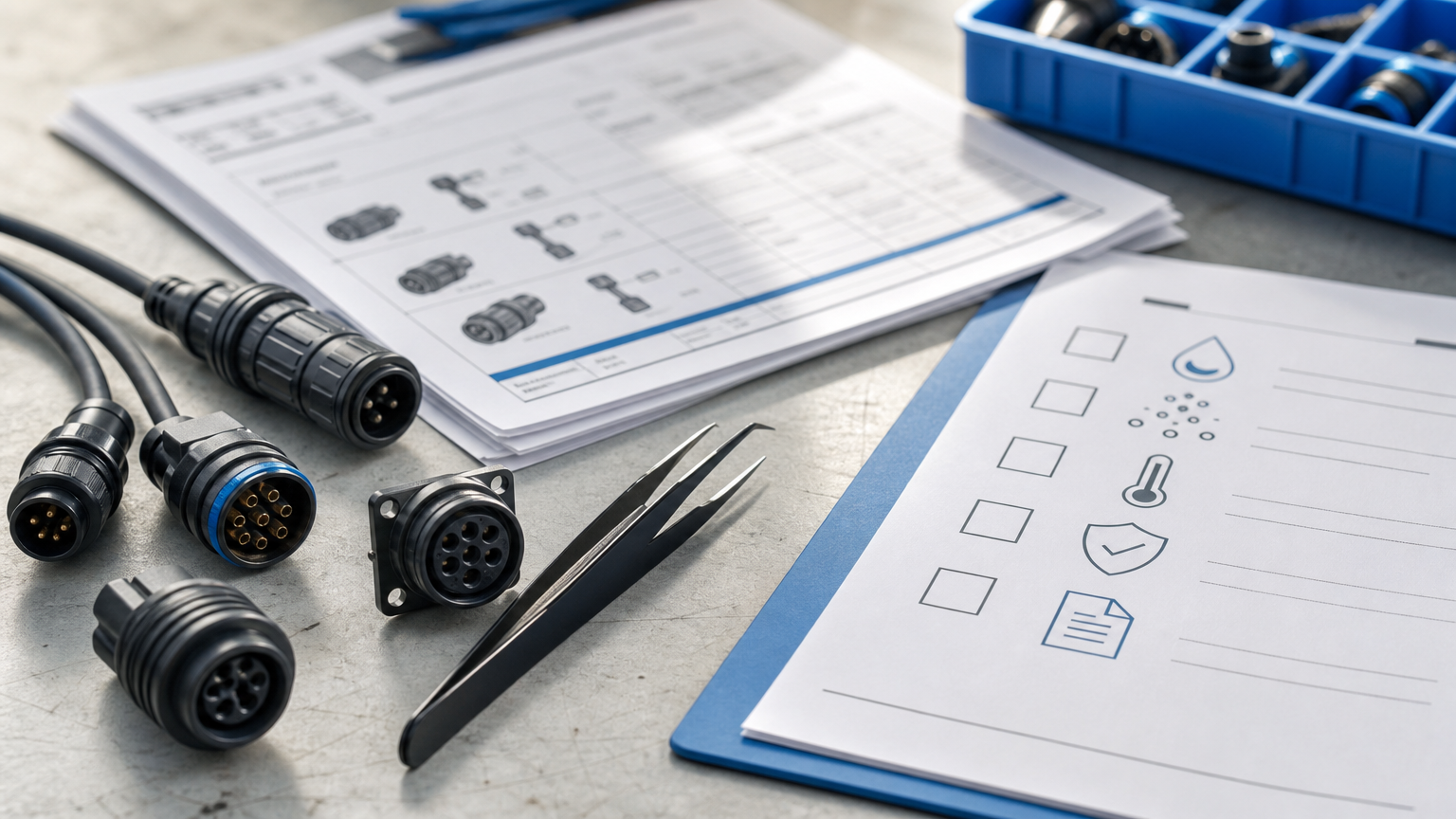
The checks that decide whether an alternate is really equivalent
A rugged connector alternate should be evaluated against the job it performs, not just against a drawing thumbnail. Start with the environment. If the assembly needs a sealed connector, define the required rating and the installed condition that makes the rating meaningful. An IP-rated connector may not protect the system if the mating cable, panel cutout, cap, gasket, or assembly process does not match the requirement.
Then check mechanical and electrical fit. The buyer should know the mating side, orientation, mounting style, board or cable termination, pin count, current rating, data-speed expectation, shielding, temperature range, and mechanical retention requirement. For USB-C, do not let the interface name hide the real requirement. A part used only for charging, a part carrying high-speed data, and a part exposed to washdown or outdoor conditions may all create different acceptance criteria.
Finally, check the commercial and documentation path. Is the alternate already approved? Does it require an engineering change? Can the supplier provide lot information, datasheets, compliance evidence, and packaging details? Does the customer or end market require a specific documentation trail? These questions are easier to answer before purchasing is under pressure.
Four files to check before a connector substitute moves forward
A rugged connector review should leave behind a small but usable qualification file. First is the sealing file: the target IP rating, the installed condition, the cap or cover, gasket material, panel thickness, cable overmold, and any assembly instruction that makes the rating real. A sealed receptacle without the matching cable-side hardware may not protect the finished unit.
Second is the mating-ecosystem file. Buyers should capture the plug, receptacle, shell size, keying, cable assembly, backshell, bend relief, and mounting style. This is where many near-matches fail. A part can share the USB-C interface or push-pull concept and still be wrong for the enclosure, harness, or service procedure.
Third is the electrical-use file. Note whether the connector is carrying charging current, high-speed data, low-speed service access, shielding, or mixed signal and power needs. USB-C naming alone does not answer that question. Fourth is the documentation file: datasheet, drawing, revision, compliance evidence where relevant, lot traceability expectations, packaging, and customer approval status.
PCX’s Star Quality Control Program is relevant at this stage because a connector alternate should be reviewed as a real board-level and cable-assembly risk item, not as an anonymous commodity. The goal is not to promise acceptance. It is to keep inspection, documentation, and traceability visible while sourcing options are evaluated.
Rugged connector RFQ checklist
| Before requesting options | Why it matters |
|---|---|
| Exact MPN, revision, mating connector, and cable-side hardware | Prevents quotes for parts that fit the interface name but not the mating system. |
| Installed environmental requirement | IP67/IP68 language is meaningful only when cap, gasket, panel, and cable assembly conditions are clear. |
| USB-C power, signal, shielding, and retention needs | Charging-only, service-port, and high-speed-data uses can create different acceptable alternate lists. |
| Customer, agency, or USB documentation constraints | Certification posture and customer approvals should travel with the RFQ instead of being rediscovered after sourcing. |
| Engineering-change and drawing-control boundary | Procurement needs to know whether a quote is for an approved replacement, an engineering candidate, or a no-go. |
| Inspection, packaging, and lot-trace expectations | Connector reels, trays, cable assemblies, and accessories should still be checked against the documentation file. |
Next buyer action
If rugged USB-C, push-pull, or other harsh-environment connectors are on an active BOM, the best next step is to review the exact requirement before the part becomes urgent. Identify the approved manufacturer list, the mating side, the environmental assumptions, and any documentation constraints. Then sourcing can search for options that match the application instead of forcing engineering to reject near-misses after the quote arrives.
PCX can help buyers review connector requirements and sourcing options while keeping documentation, inspection, and timing visible. If a connector line is difficult to source or an alternate needs review, share the exact MPN, target quantity, application constraints, and approved alternates through the PCX parts request form.