

When pricing or allocation pressure appears, the practical move is not blanket panic buying. It is disciplined triage: confirm what is actually tight, document the commercial and quality tradeoffs, and keep one stressed component family from distorting the whole purchasing plan.
Start by separating a category signal from a full-BOM emergency
TrendForce’s November 2025 memory spot update is a good example of why buyers need specificity before they escalate. The firm reported that DDR5 spot prices jumped 30% in a week, buyers were snapping up quotes immediately, and suppliers were releasing only confined wafer resources while some sellers became reluctant to release product. That is a real market signal, but it is still a category-specific signal. For sourcing teams, the risk is less about the headline and more about treating every component line as if it has the same exposure.
Before anyone broadens coverage, the first questions should be practical ones: Is the pressure limited to memory, storage, or a narrow IC family? Does it affect current builds or only future buffer decisions? Are there contract commitments, NCNR terms, or lot-size restrictions attached to the supply that is still available? If the answer is narrow, the response should stay narrow too.
- Confirm whether the signal is isolated to one family such as DDR5, NAND, or a specific integrated circuit class before escalating the whole BOM.
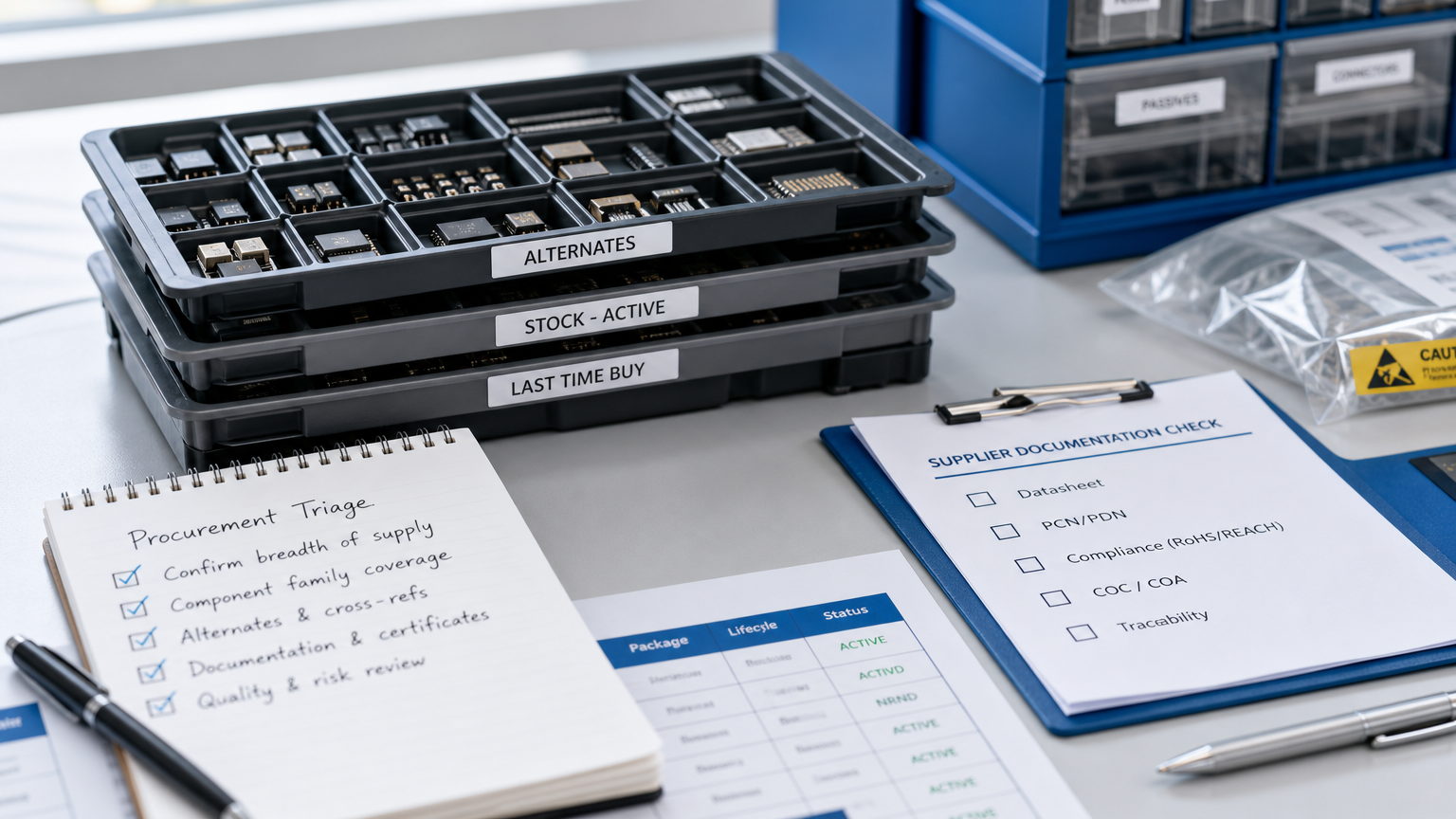
- Document approved alternates, lot constraints, NCNR exposure, and true build quantities before accepting spot-market offers.
- Tighten source, inspection, and traceability requirements as soon as a program may need open-market supply.
Lead-time headlines are not the same thing as manufacturing reality
Electronics Sourcing’s April 2025 lead-time explainer, based on ECIA guidance, makes an important distinction that buyers often lose when markets speed up: lead time is a channel estimate influenced by inventory and supply-chain conditions, while cycle time is the actual time required to manufacture the component. The piece notes that semiconductor manufacturing cycle times can run from roughly 12 weeks to more than six months depending on process complexity, with final assembly and test adding another four to eight weeks.
That matters because a sudden shift in quoted lead times does not automatically mean every supplier is seeing the same factory condition at the same time. It may reflect finished-goods inventory, backlog posture, allocation priorities, or simply where channel stock is thin. Buyers who understand that difference are better positioned to ask the right follow-up questions instead of converting one noisy quote into a broad panic signal.
Review redesign and alternate-part decisions through an availability lens
Not every response to pressure should be a move to the newest part. Electronics Sourcing’s June 2025 piece on next-generation components argues that the right first step is to define required functionality and then test whether preferred parts are available in quantity, at a manageable price point, and near the manufacturing footprint that matters to the program. It also warns that scarce or high-demand next-generation parts can create expensive buffer-inventory behavior.
For procurement and engineering teams, the practical signal is to evaluate alternates with the same discipline used for primary parts. Previous-generation or already-qualified components may be the better sourcing decision when compatibility, total cost, and time-to-build matter more than a spec-sheet upgrade. That does not mean avoiding redesigns. It means making sure redesign effort is solving a real supply problem rather than adding fresh qualification risk during an already stressed buy cycle.
If spot buying enters the plan, verification has to get tighter
Shortage pressure often changes buyer behavior faster than it changes product availability. Electronics Sourcing’s April 2026 article on counterfeit exposure notes that scarcity and rising prices create conditions where inauthentic parts become more attractive to bad actors and more tempting to rushed programs. The same article argues that supplier qualification, inspection, and testing become even more important when genuine parts are scarce and expensive.
That is why spot buying should be treated as triage, not as a shortcut around normal controls. If a team has to widen sourcing options, it should also widen documentation requirements: traceability, inspection checkpoints, date-code review, lot segregation, and a clear approval path for any non-routine supplier. PCX’s Star Quality Control Program is the kind of process signal buyers should look for when verification pressure increases.
Where PCX fits when the market gets noisy
In practice, allocation response is usually a board-level sourcing exercise, not a one-line item. Memory and other integrated circuits may be the first category under pressure, but adjacent passive components and supporting line items can also become part of the timing problem once builds are rescheduled. The useful role for a sourcing partner is to help buyers narrow the true exposure, compare alternate options responsibly, and keep quality discipline intact while commercial pressure rises.
That is also where planning beats urgency. Buyers who need a broader framework for managing volatile supply signals can review PCX’s perspective on supply-chain resilience, then move quickly on the specific parts that actually threaten production. If a program needs help validating availability options without relaxing traceability standards, request a quote from PCX with the affected part numbers, approved alternates, and timing window.
Request a quote from PCX.