
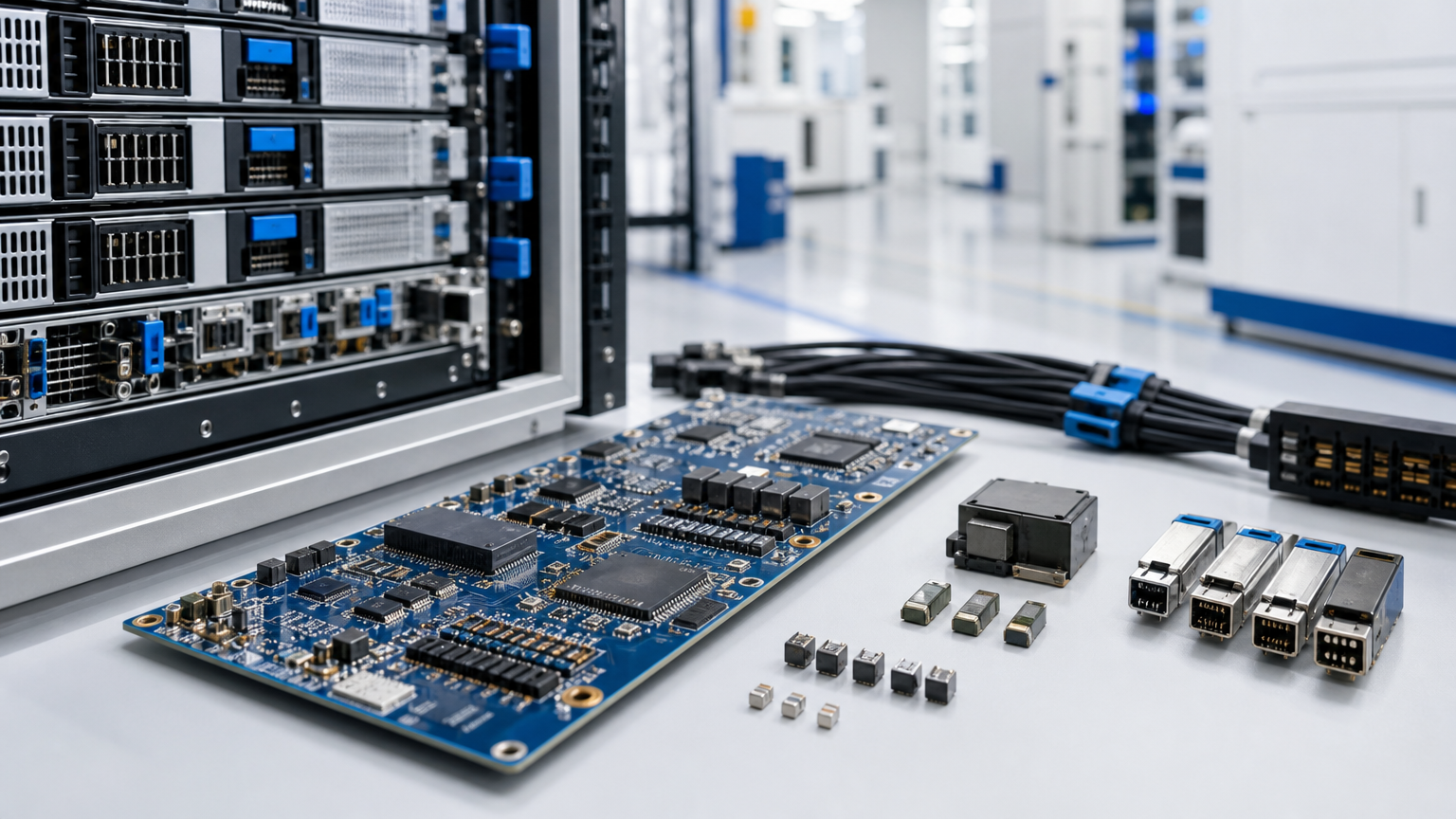
AI server demand tends to show up first in headline GPUs and HBM, but the sourcing pressure can spread into the smaller board-level parts that make the rack actually buildable.
AI infrastructure is often covered as a contest between accelerator vendors, hyperscalers, and advanced-node foundries. That framing is useful, but it can hide the practical question for an OEM buyer: which components on the board are likely to become harder to price, qualify, or replace as AI systems consume more capacity?
The answer is rarely a single line item. A GPU or ASIC can anchor the demand story, yet every high-density server also depends on memory, power conversion, thermal-adjacent control, board-to-board connectivity, timing, protection, and ordinary passives. PCX should treat the AI buildout as a BOM review trigger, not just a market headline.
Use this as a working sourcing brief with procurement, engineering, and quality in the same review. Procurement owns supplier feedback and available options, engineering owns alternate feasibility and qualification timing, and quality owns the documentation, inspection, and test expectations that keep a fast decision controlled.
If the signal raises concern, the next step is a named MPN list, not a broad market reaction. Capture the exact parts, approved manufacturers, demand horizon, on-hand inventory, current quote status, and the date when the team will decide whether to monitor, quote, qualify an alternate, or buy early.
Start with the complete server, not the headline chip
TrendForce’s AI server work is a useful signal because it ties demand to real system shipments and memory consumption, not only to stock-market narratives. For sourcing teams, the practical step is to map that demand into component families: HBM and DRAM modules, enterprise storage, PMICs, BMCs, board controllers, connectors, high-current power parts, and passives around dense compute boards.
That mapping matters because scarcity can move sideways. A buyer may not purchase the flagship accelerator, but the same supplier base may be prioritizing parts into AI racks, qualification platforms, or hyperscale programs. Lead times can then tighten in parts that look ordinary inside an industrial or communications BOM.
Memory pressure can become a board-level planning issue
HBM is the most visible memory story, but buyers should not stop there. AI inference and training systems also affect server DRAM, SSD demand, controller roadmaps, and the way memory suppliers allocate engineering and wafer capacity. A routine embedded or industrial program may feel the effect indirectly through pricing, minimum order behavior, or fewer fast-turn options.
The right move is a ranked memory exposure list. Put high-density DRAM, managed NAND, EEPROM, timing parts, and any single-approved memory device into a simple traffic-light view. Separate parts that are easy to cross from parts where firmware, layout, thermal behavior, or customer approvals make substitution slow.
- Identify single-approved memory devices and alternates that require engineering validation.
- Track whether supplier notices affect density, package, speed grade, or full product family.
- Flag programs where a memory change forces firmware, qualification, or customer paperwork.
Power and connectivity deserve early attention
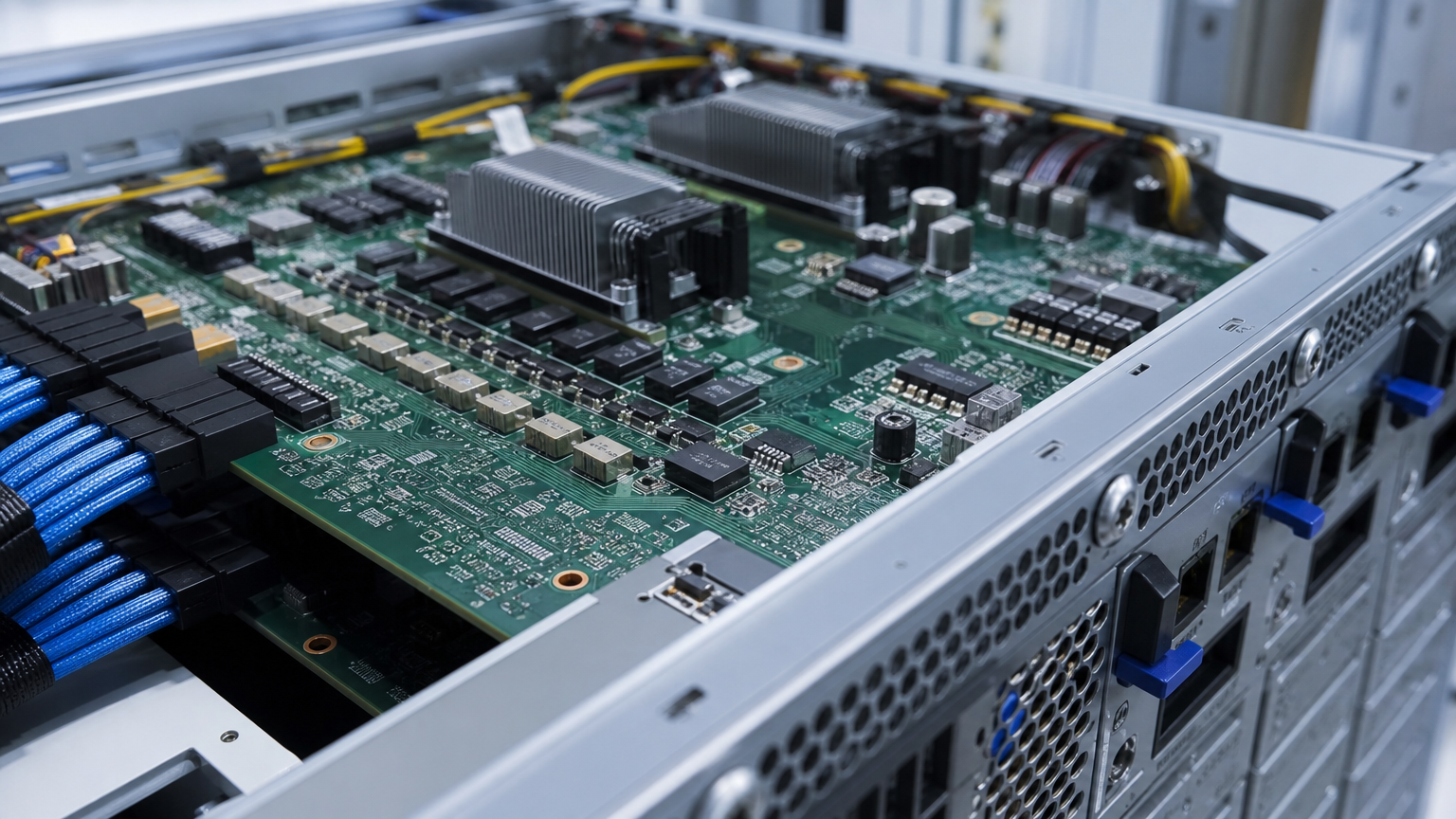
High-density AI boards need stable power delivery, clean signaling, and dependable interconnects. That is why buyers should watch supporting categories such as power management ICs, high-current connectors, board-to-board interfaces, fuses, protection devices, capacitors, inductors, and precision resistors.
These parts are easy to overlook because they are not the story in the press release. They become the story when a build is delayed by a regulator, connector series, current-sense part, or capacitor value that was treated as routine until allocation narrowed the available pool.
Turn AI headlines into a sourcing review
The practical review is not complicated. Start with the BOMs most exposed to server, networking, power, storage, and industrial compute supply chains. Rank parts by demand overlap, single-source exposure, available alternates, forecast horizon, and the time required for engineering approval.
Then separate watch items from action items. A watch item may need only price tracking and weekly availability checks. An action item needs approved alternates, broker-risk controls, test requirements, or a PCX sourcing conversation before the current channel narrows.
Where PCX fits
PCX is useful in this conversation because the risk cuts across categories. Buyers may need help with integrated circuits, connectors, and passive components at the same time.
The goal is not to react to every AI headline. The goal is to identify which parts deserve a sourcing plan, which alternates are realistic, and which purchases need extra documentation or inspection before the market gets tighter.
The useful buyer question is not whether AI demand is real. It is where that demand touches the parts your production line already depends on.
Buyer checklist
| Check | Why it matters | Owner |
|---|---|---|
| Exact part exposure | Separates broad market news from the MPN, package, grade, and approved-vendor reality on the BOM. | Procurement |
| Alternate path | Shows whether a change is a purchasing decision, an engineering qualification project, or a customer approval issue. | Engineering |
| Documentation and quality | Keeps traceability, inspection, testing, and acceptance requirements visible before the PO is placed. | Quality |
Sources and further reading
- Strong Demand from CSPs and Sovereign Cloud to Drive Over 20% Growth in AI Server Shipments by 2026, Says TrendForce, TrendForce
- Double-digit growth in global 300mm fab equipment spending for 2026 and 2027, Evertiq