

Global Market Predictions for 3D Printing
Living in the era of digitalization, some of us have dreamt of our very own Rosey the Robot from the moment we caught a glimpse of The Jetsons. These characters showed us dazzling possibilities for the year 2062, and while it might be a bit of a wait for a robot that cooks, cleans and plays ball with the kids–we might start being able to 3D print our own homes in the next two decades.
The aggressive research and development in three-dimensional printing (3DP) is set to hit an all-time high by 2028. The growing demand for prototyping applications from various industries such as healthcare, automotive, aerospace and defense is expected to drive market growth. Soon, we’ll be able to embed electronic components into 3D prints that can tailor prescription doses and measure bones with living cells.
The Global 3D Printing Market

Globally, 2.1 million 3D printers shipped in 2020; by 2028, the shipments are expected to reach 15.3 million units. In 2020, the global 3D printing market was valued at USD 13.78 billion and is expected to expand at a compound annual growth rate (CAGR) of 21.0% from 2021 to 2028. Horizon, The EU Research and Innovation Magazine tell us, “At the moment, the biggest problem is that 3D printing, or additive manufacturing as it’s known in the industry, is slow and expensive, and big companies mostly use it to make prototypes. However, things are poised to change. Technology is becoming much better and cheaper. And on top of that, researchers are developing ways to combine 3D printing with other techniques so that electronics and fiber optics can be embedded within devices.”
3D Printing: Moving Sustainably Forward

The industrial application of 3DP is called Additive Manufacturing (AM); this involves a layer-by-layer addition of material to form an object referring to a three-dimensional file with the help of software and a 3-dimensional printer. Next, are relevant 3D printing technology is selected from the available set of technologies to implement the process. The last step involves deploying this process across different industry verticals based on necessity. However, another burgeoning segment could overshadow all other areas of this industry, which is the organic 3D printing business.
While several companies have succeeded in replicating organs for transplant with lab mice, we are likely 15 years or more ahead of tissue engineering. They have even duplicated ‘beef’ and ‘pork’ in perfect comparison to help eliminate the need o raise cattle in the future. Nevertheless, computational density is required to further the endeavors of scientists, architects and farmers for this estimated $63 billion industry to grow.
How To Boost Supply Chain Resilience
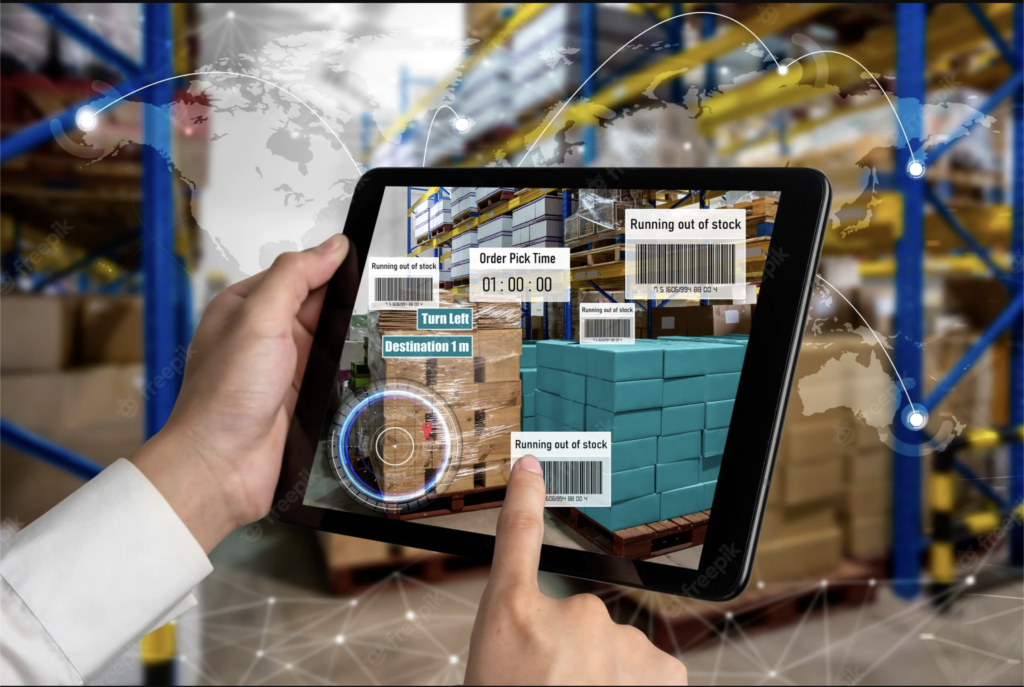
The Association for Supply Chain Management explains the benefits of 3D printing and how we can change the future significantly regarding supply and demand. “Because 3D printing production can be closer to the consumer location, manufacturing organizations leveraging this technology can build shorter, stronger, more resilient supply chains. Physical inventory is a weak point in any supply chain. But with printing on-demand capability, inventory becomes digital. Engineers and manufacturers can send the design file to the 3D printer nearest the next step in the supply chain, whether the manufacturer receives the component or the consumer receives the final product. Then, there is less need to store and incrementally move inventory. Instead, parts can be printed and shipped the shortest practical distance, thus reducing carbon dioxide emissions and boosting supply chain resilience.”
By implementing 3D printing for growth, you will initially see a waste reduction. Because it’s one of the purest digital technologies, you eliminate the cost of moving production and reduce your carbon footprint by eliminating transportation. Leveraging this technology to stimulate change can ultimately help satisfy the demands of end customers and effect the supply chain in a very positive way.
Want to know more about improving the supply chain? Drive sustainability forward with PCX today.