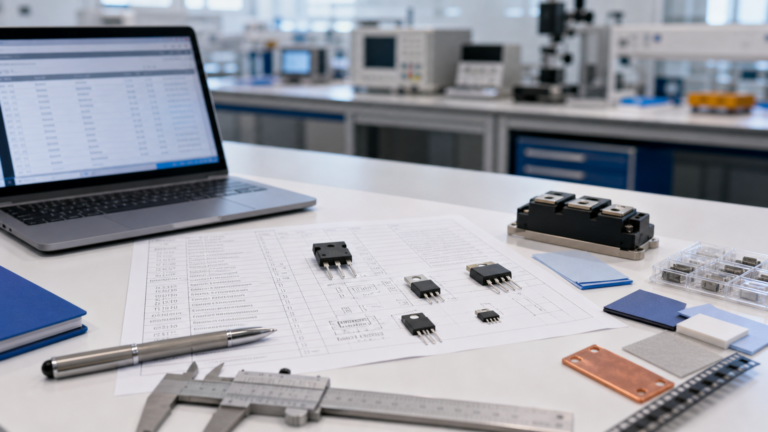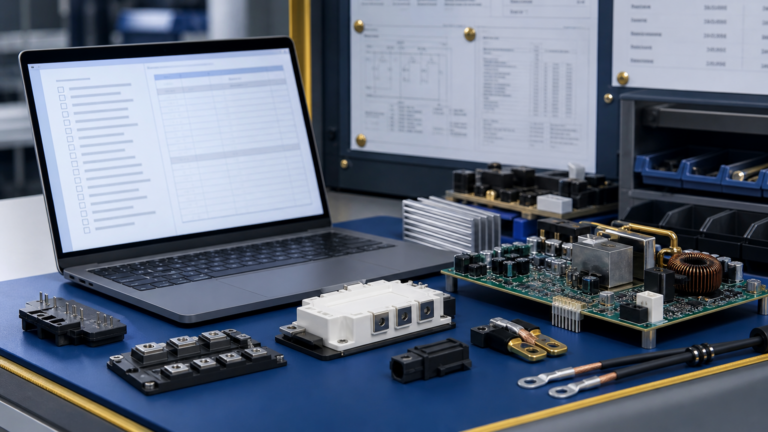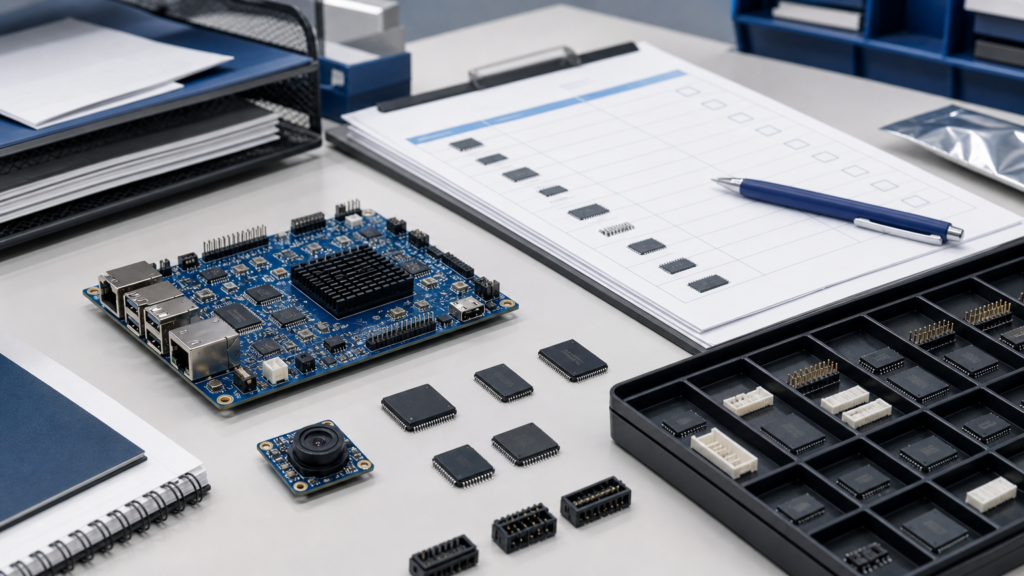
Embedded vision demos are easy to treat as engineering news, but they often point to a quieter sourcing question: which components, firmware assumptions, and documentation requirements become hard to change once a design is qualified? That is the useful buyer-watch angle from a recent Microchip facial-recognition demo covered by Electronic Design. This is not a broad market forecast, and it is not a claim that microcontrollers or vision components are moving into allocation. It is a reminder to keep the security, MCU, memory, camera, and firmware portions of the sourcing file current before the next build decision.
What this means for PCX buyers
For PCX buyers, the signal is narrow and practical. When a design uses on-device recognition, liveness detection, or similar embedded-security features, the BOM is no longer just a list of orderable parts. It also reflects software support, processor capability, camera and sensor choices, memory headroom, lifecycle status, package fit, and the evidence needed to approve alternates. If those dependencies are not written into the RFQ file, a buyer may find out too late that a substitute MCU, image sensor, memory device, connector, or power-management part changes more than price and lead time.
The source signal
Electronic Design reported on July 8 that Microchip demonstrated a vision system with liveness detection for accurate, secure, fully on-device facial recognition, eliminating reliance on the cloud. The article sits in the embedded category and identifies Microchip Technology, automation, facial recognition, security, and discovery/demo context. The sourcing lesson should stay within those bounds: on-device security and recognition features can make approved component choices more interdependent than they appear on a purchasing spreadsheet.
Where alternates can get complicated
An embedded-vision BOM can include a microcontroller or processor, external memory, image sensor or camera module, power-management ICs, crystals, connectors, passives, protection devices, programming headers, and sometimes secure elements or authentication features. A buyer may be able to find a pin-compatible component for one line and still face firmware, toolchain, timing, thermal, or qualification work before it is usable. That is especially true when the end product depends on security behavior, local processing, or deterministic response rather than simple data capture.
The practical question is not whether every edge-vision design needs redesign. The question is whether the sourcing file says which parts are truly interchangeable, which are approved only by engineering, and which require software, regulatory, customer, or security review. That distinction helps procurement avoid treating a nominal alternate as a ready production source.
Build a substitution boundary table
The useful buyer artifact is a short table, not a longer narrative file. One column should list the purchasable MPN. The second should list the dependency that makes substitution hard: firmware library, camera interface, memory size, boot mode, package, power rail, programming fixture, approval status, lifecycle state, or customer documentation. The third should identify who can approve a change: procurement, engineering, quality, the customer, or a security owner. That table gives the buyer a usable boundary between a quoteable alternate and an engineering change.
For example, a microcontroller line may require matching package, peripherals, toolchain support, memory headroom, and programming flow. A camera module may depend on connector, optics, interface timing, mechanical fit, and image-processing assumptions. A memory or power-management line may be technically simple to buy but still linked to boot behavior, thermal margin, or validated firmware. Treat each line by dependency, not by part category alone.
This matters for quality as well as availability. When sourcing outside the easiest channel, labels, packaging, MPN consistency, moisture-sensitive handling, programming status, and manufacturer traceability claims still need review. PCX’s Star Quality Program is relevant because security-oriented embedded designs can carry more risk when a substitution is rushed or poorly documented.
Components to flag in the file
For buyer-watch purposes, the flagged families are microcontrollers, processors, integrated circuits, memory, power management, connectors, passive components, discretes, cameras or image sensors, crystals, and programming accessories. The RFQ should also note any approved manufacturer list restrictions, firmware revisions, lifecycle status, and customer-specific inspection expectations. If a BOM line is connected to liveness detection, on-device facial recognition, encryption, authentication, or local AI inference, treat it as a controlled design dependency until engineering says otherwise.
PCX market insight
The useful procurement move is to separate a design-dependency signal from a market-pressure signal. Electronic Design’s Microchip demo is source support for the first, not the second. It tells buyers that embedded-security and edge-vision features can increase the number of checks required before an alternate is acceptable. It does not prove a shortage, a price move, or a universal capacity problem. A calm sourcing review should preserve that distinction.
RFQ next step
If an embedded-vision or security-enabled board is moving toward build, send PCX the exact BOM, approved alternates, firmware or programming notes, lifecycle constraints, and documentation expectations. Buyers can request sourcing support or share forecasted demand with those notes attached so the quote review reflects the design constraints, not just part numbers.