Hitachi Energy’s Lenzburg Signal Puts Power-Stage Service Files in Focus
Hitachi Energy’s Lenzburg announcement is not just another fab-capacity headline. For buyers managing utility, industrial, transportation, and data-center equipment, the more useful takeaway is service-life discipline: which power-stage parts have a complete sourcing file before the next maintenance build, repair order, or production pull?
Evertiq reported that Hitachi Energy broke ground on a new facility at its power semiconductor manufacturing site in Lenzburg, Switzerland. Hitachi Energy’s June 24 release says the project reinforces its commitment to advanced power semiconductor manufacturing and points to demand from utility, industry, data center, and transportation sectors. TrendForce’s May power-IC report adds broader context: power-related processes and AI power IC demand are receiving more attention at mature-node foundries. The buyer implication is specific: long-life power electronics need better documentation before demand pressure reaches the quote desk.
What this means for PCX buyers
For PCX buyers, the immediate question is not whether one new facility changes today’s lead time. It is whether the power-stage file is complete enough to support a responsible buy when schedules tighten. A useful file names the exact approved MPN, package, voltage and current ratings, thermal constraints, accepted alternates, date-code rules, documentation requirements, and any customer or engineering approval path.
Why Lenzburg matters to long-life programs
Hitachi Energy’s release ties the Lenzburg site to utility, industry, data-center, and transportation demand. Those sectors often run equipment for long service windows. That makes the sourcing problem different from a simple new-production shortage: buyers may need parts for installed-base support, replacement assemblies, field repairs, or production programs that cannot easily redesign a power stage.
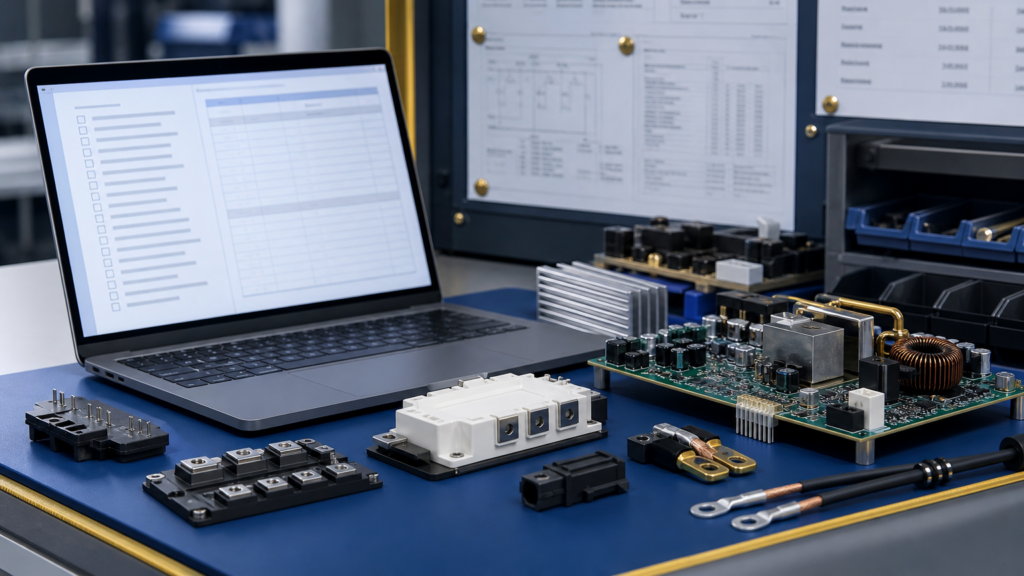
In those settings, a power semiconductor is rarely a standalone line item. It may be tied to a heatsink, gate driver, isolation device, snubber network, connector, capacitor bank, mechanical envelope, and customer acceptance record. If one of those dependencies is not documented, an available part can still fail the practical acceptance test.
What the sources actually support
The directly inspected sources support a careful planning read. Evertiq and Hitachi Energy support the Lenzburg facility and its power semiconductor manufacturing context. TrendForce supports the broader point that power-related mature-node processes and AI power IC demand are becoming more strategically important. None of those sources prove that a specific PCX customer part is constrained, allocated, newly available, or interchangeable.
That boundary matters. A sourcing team should not use a capacity story as evidence for a spot buy or a forced substitution. It should use the story as a reminder to verify whether the power-stage file can survive a tighter market.
Which power-stage files deserve review
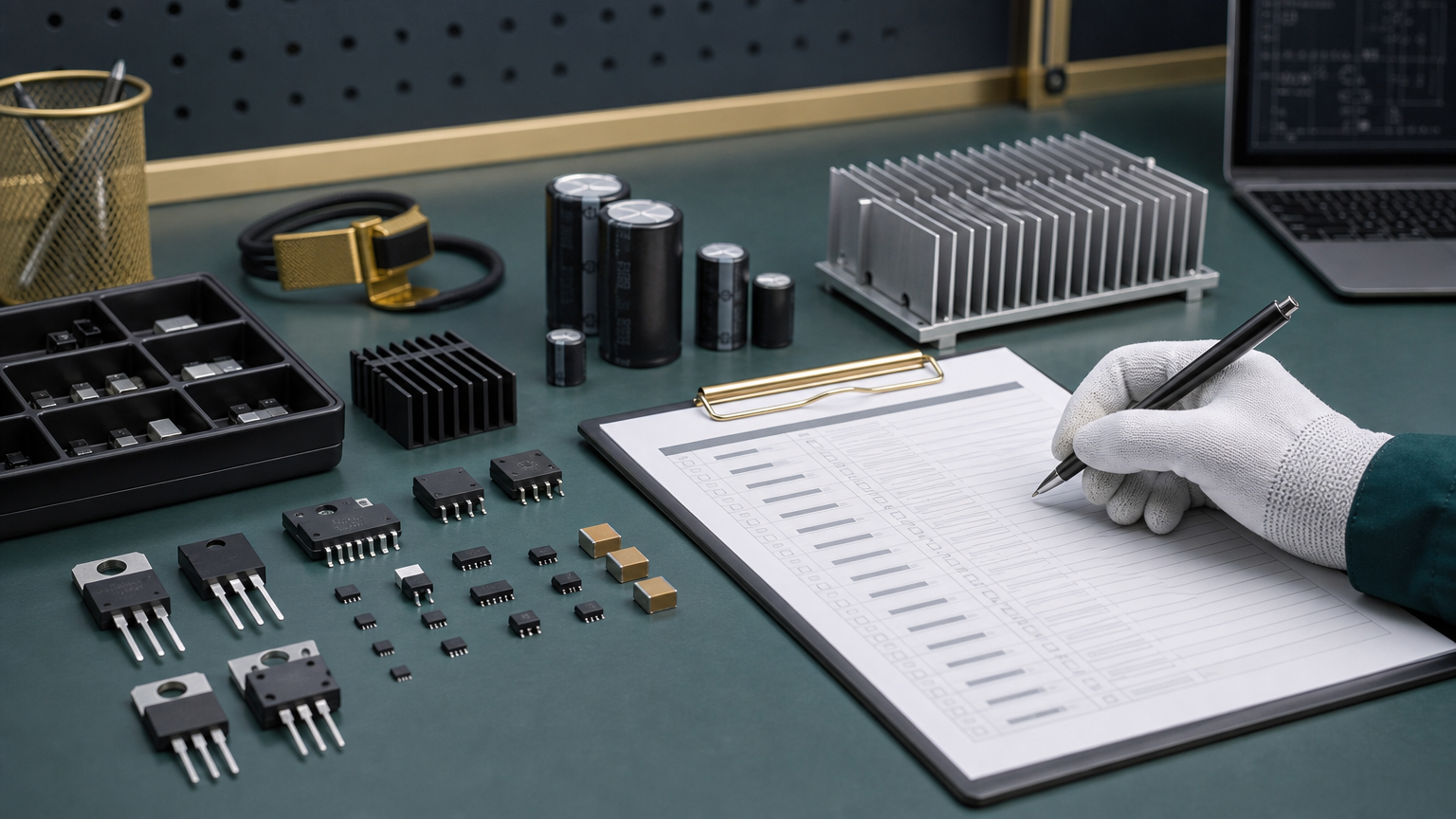
Start with high-consequence devices: IGBTs, thyristors, power modules, rectifiers, diodes, MOSFETs, gate drivers, optocouplers, current sensors, TVS protection, and control ICs used in qualified assemblies. Then review the supporting bill of materials around them: film and electrolytic capacitors, heatsinks, fans, connectors, magnetics, relays, switches, and hardware that affects thermal or electrical performance.
For each line, buyers should ask four questions. Is the current source still approved for the program? Is there a documented alternate with the same acceptance path? Are quality requirements clear enough for non-routine sourcing? Does forecast visibility cover the next build or service window?
What to verify before accepting an alternate
Power-stage alternates need more than a cross-reference table. Buyers should verify package fit, electrical ratings, switching behavior where relevant, thermal assumptions, agency or customer requirements, lot documentation, and inspection criteria. If the part supports fielded equipment, service history and prior acceptance records may matter as much as the datasheet.
This is where a sourcing file protects the schedule. When purchasing already knows which alternates are acceptable, which require engineering review, and which are not usable, the team can move faster without weakening controls.
Buyer takeaway
Use the Lenzburg signal as a service-life review prompt. Identify power-stage BOM lines where the sourcing file is thin, the approved source base is narrow, or the next demand window is not visible. Then decide whether the next action is forecast clarification, alternate documentation, RFQ support, or engineering review.
For exact-MPN support, buyers can review PCX’s integrated circuits category, keep inspection expectations aligned with the PCX Star Quality Program, or send PCX a parts request with the part number, approved alternates, service window, and documentation requirements.