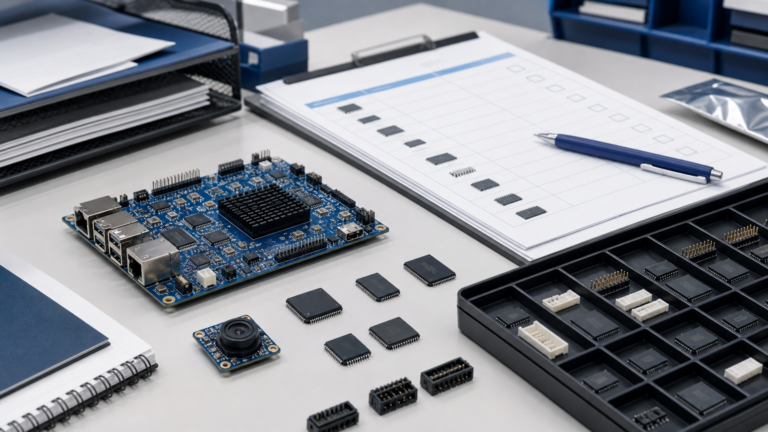
A fresh connector signal is worth reading carefully because it is not really a shortage story. It is an RFQ-quality story. Electronics Sourcing reported July 12 that Q5D Technologies and Kyocera AVX are jointly developing custom insulation displacement connector (IDC) concepts optimized for robotic wire-harness assembly. For buyers, the useful question is not whether every connector line is tight. The sources do not support that claim. The better question is whether connector RFQs are specific enough for the way the assembly will actually be built.
That distinction matters as more products combine smarter electronics, compact boards, and connectorized harnesses. A separate Electronics Sourcing note on STMicroelectronics’ STM32C5 mainstream microcontrollers shows how entry-level smart home, consumer, industrial, robotics, wearables, and computer peripheral applications continue to add capable electronics at cost-sensitive price points. More electronics does not automatically mean immediate component pressure, but it does mean more BOM lines where connector, cable, and assembly assumptions can become sourcing constraints if they are left vague.
The market signal
The IDC article says Q5D and Kyocera AVX are moving from standard parts toward custom IDC designs for Q5D’s robotic wiring platforms. It also says the concepts are modular and can be arranged side by side so designers can scale contact count and layout for each application. That is a narrow, useful signal: connector sourcing can become tied to the assembly process, not just to electrical continuity or a broad family description.
For procurement teams, that should change the first RFQ draft. A request that only says “IDC connector” or lists an incomplete part description can invite quotes that look close on paper but do not preserve termination assumptions, contact layout, packaging, or approved handling requirements. When automation is involved, the wrong substitute may create engineering work even if the component appears available.
What this means for PCX buyers
PCX buyers should treat automated-harness connector lines as sourcing-file candidates. That does not mean buying every line earlier or assuming broad market scarcity. It means documenting the exact manufacturer part number, approved alternates, wire or cable assumptions, termination method, contact count, layout constraints, packaging needs, and any notes from engineering or manufacturing before the RFQ goes out.
This is also where forecast and release timing matter. If a line is tied to a robotic assembly process, a qualified build, or a customer-approved configuration, procurement benefits from knowing whether demand is a one-time prototype need, a staged production release, or a recurring build. That information helps sourcing teams avoid treating a process-sensitive connector like a generic catalog part.
What an automation-aware connector RFQ should include
An automation-aware RFQ should start with the exact MPN and approved manufacturer, but it should also include the assembly context. Buyers should identify the termination style, wire size or cable assumptions when known, required contact count, layout requirements, packaging or feed format, and any documentation that must travel with the part. If engineering has approved only a limited set of alternates, that boundary should be visible before suppliers are asked to quote.
The goal is not to make the RFQ longer for its own sake. The goal is to prevent false confidence. A quote can look attractive until the team learns that the part does not fit the automated termination process, arrives in an unsuitable packaging format, lacks required documentation, or needs engineering review before use. Better front-end notes reduce that risk.
Where long-cycle interconnect programmes add another check
The July 8 Electronics Sourcing article on naval and shipboard interconnect supply adds a useful second lens. It describes environments shaped by shock, vibration, saltwater exposure, electromagnetic interference, and long service lives. It also notes that many products in those environments sit within build-to-order supply models, with minimum order quantities and lead times that may not align neatly with programme timing.
Those details should not be merged into a generic connector shortage claim. Instead, they show why some interconnect lines deserve a more disciplined release review. In qualified or long-cycle applications, the sourcing file may need to cover the cable, connector, backshell, tubing, shielding, standards, documentation, and release pattern together. A late change to one item can affect the assembly path around it.
What to verify before accepting alternates
Before accepting an alternate on a process-sensitive connector line, buyers should ask four practical questions. Does the alternate preserve the termination method and assembly process? Does it match the contact layout, materials, and environmental assumptions that matter for the application? Can the supplier support the required documentation, packaging, and traceability expectations? And will the proposed delivery schedule fit the actual build or release pattern?
If the answer is unclear, the line should be escalated for engineering or quality review before a purchase decision is made. This is especially important when urgency pushes teams toward quick cross-references. A cross-reference can be useful, but it is not a substitute for evidence that the part fits the assembly and qualification context.
Where PCX can help
PCX can help buyers make connector sourcing requests more usable before the market forces a rushed decision. For IDC, harness, cable, and other interconnect lines, that means starting from exact part numbers, approved alternates, application notes, documentation expectations, packaging requirements, forecast demand, and release timing. It also means keeping quality and traceability visible when a hard-to-find or alternate-source path is being considered.
If your team is reviewing connector or harness-related BOM lines for an upcoming build, share the part numbers, approved-source notes, demand timing, and any assembly constraints that are already known. PCX can help organize sourcing options and documentation questions before a vague RFQ becomes a late-stage problem.
Sources and further reading
- Electronics Sourcing: IDC connectors designed for automated harness assembly
- Electronics Sourcing: Planning interconnect supply for naval and shipboard programmes
- Electronics Sourcing: Cost-effective microcontrollers enable smarter products
For sourcing support, buyers can share forecasted demand or request sourcing support. For quality context, see the PCX Star Quality Program. For related planning context, see PCX’s note on why AI data-center interconnects belong in the BOM review.