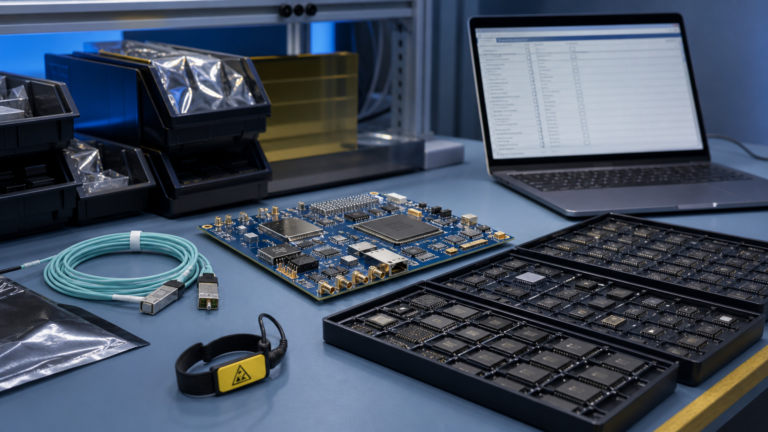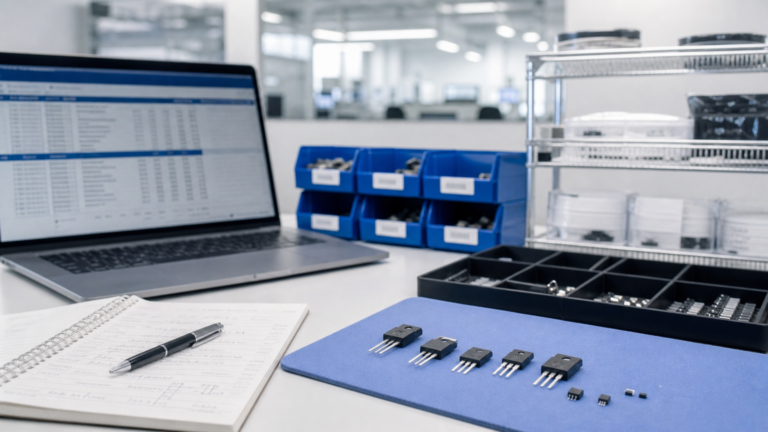
A fresh patent and import-status dispute around gallium nitride power devices is worth a sourcing review, but not a panic buy. DigiTimes reported that Infineon has blocked Innoscience GaN products from the U.S. market after a patent win. Infineon said in a July 7 announcement that a U.S. International Trade Commission final determination was upheld after the presidential review period, resulting in import and sales bans against Innoscience patent-infringing GaN products.
The procurement issue is more precise than a broad GaN shortage call. Innoscience, in its own statement on the ITC final determination, said its current commercial offerings use redesigned products that fall outside the scope of one asserted patent and that its products may continue to be imported and sold in the United States. For buyers, the practical question is which approved part numbers, revisions, and program sources sit on which side of that distinction.
What this means for PCX buyers
For PCX customers sourcing power semiconductors, MOSFETs, driver ICs, power supplies, battery-management assemblies, telecom power boards, or data-center power-conversion hardware, the immediate action is to tighten the sourcing file. A legal decision does not automatically mean every GaN line is unavailable, and supplier statements can differ in scope. It does mean that U.S.-served programs should verify whether any quoted or approved GaN device is a legacy affected item, a redesigned current offering, or an alternate from a different approved source.
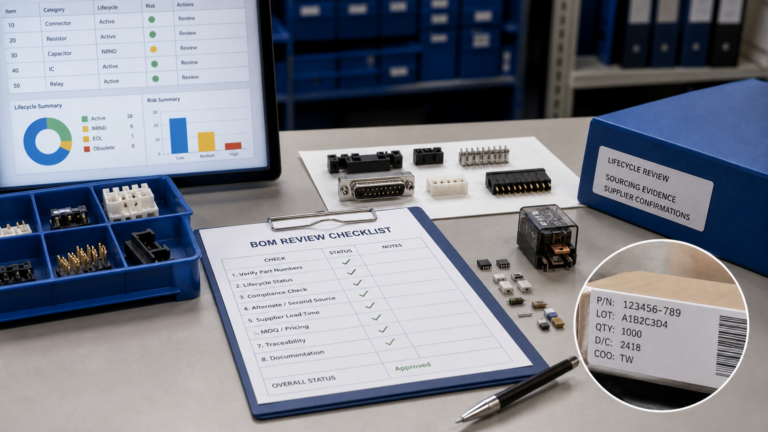
That review should happen before an urgent RFQ forces a rushed substitution. A procurement team should connect the part number, package, voltage class, qualification status, approved manufacturer list, date-code requirement, and end-market destination in one place. If a contract manufacturer, broker, or alternate channel offers material, the buyer should ask for traceability and documentation that matches the specific approved device, not only the brand or family name.
Where the sourcing risk may show up on the BOM
GaN devices are often selected for high-efficiency, high-frequency power conversion. In practice, that means a sourcing change can touch more than the transistor. Gate drivers, magnetics, thermal parts, PCB layout assumptions, protection components, and compliance documentation may all depend on the selected device and package. A nominally similar alternate can change switching behavior, thermal margin, qualification evidence, or customer approval status.
The highest-risk buys are likely to be programs that already have limited approved alternates, tight delivery windows, or U.S. import exposure. Automotive, industrial, telecom, server-power, renewable-energy, and fast-charging applications should treat the news as a prompt to check approved-source status and demand visibility. The right takeaway is not to assume allocation. It is to avoid discovering a supplier-option problem only after the line needs material.
What to document before changing a power-device source
Before moving from one GaN source to another, buyers should document the engineering approval basis, the applicable manufacturer part number, the exact package and revision, and any customer or regulatory limits. They should also preserve source evidence: the supplier statement, the distributor or channel documentation, the quote trail, and any traceability records needed for quality review. This is especially important when market news creates confusion between affected legacy products and current redesigned offerings.
PCX can help buyers review availability, alternate sourcing options, and documentation for power semiconductor BOM lines without treating every headline as a blanket market signal. If a program depends on a specific GaN device or a constrained power-conversion design, send the BOM or part list through the PCX parts request workflow so the sourcing discussion starts with the exact device and evidence requirements.