Silicon-carbide inverter design is usually discussed as an engineering performance topic. For buyers, it also creates a practical sourcing question: are the capacitor requirements in the RFQ specific enough for a responsible availability search? This is a narrow buyer-watch note, not a shortage call and not a forecast about passive-component pricing. The useful signal comes from a recent Electronic Design article explaining that faster SiC switching changes the stress placed on DC-link capacitors in EV inverter designs.
What this means for PCX buyers
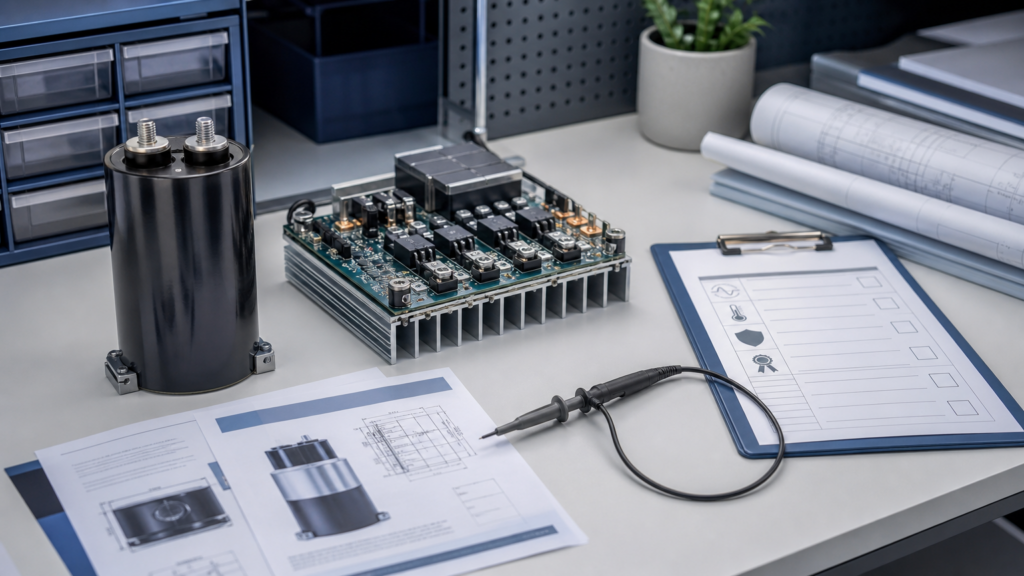
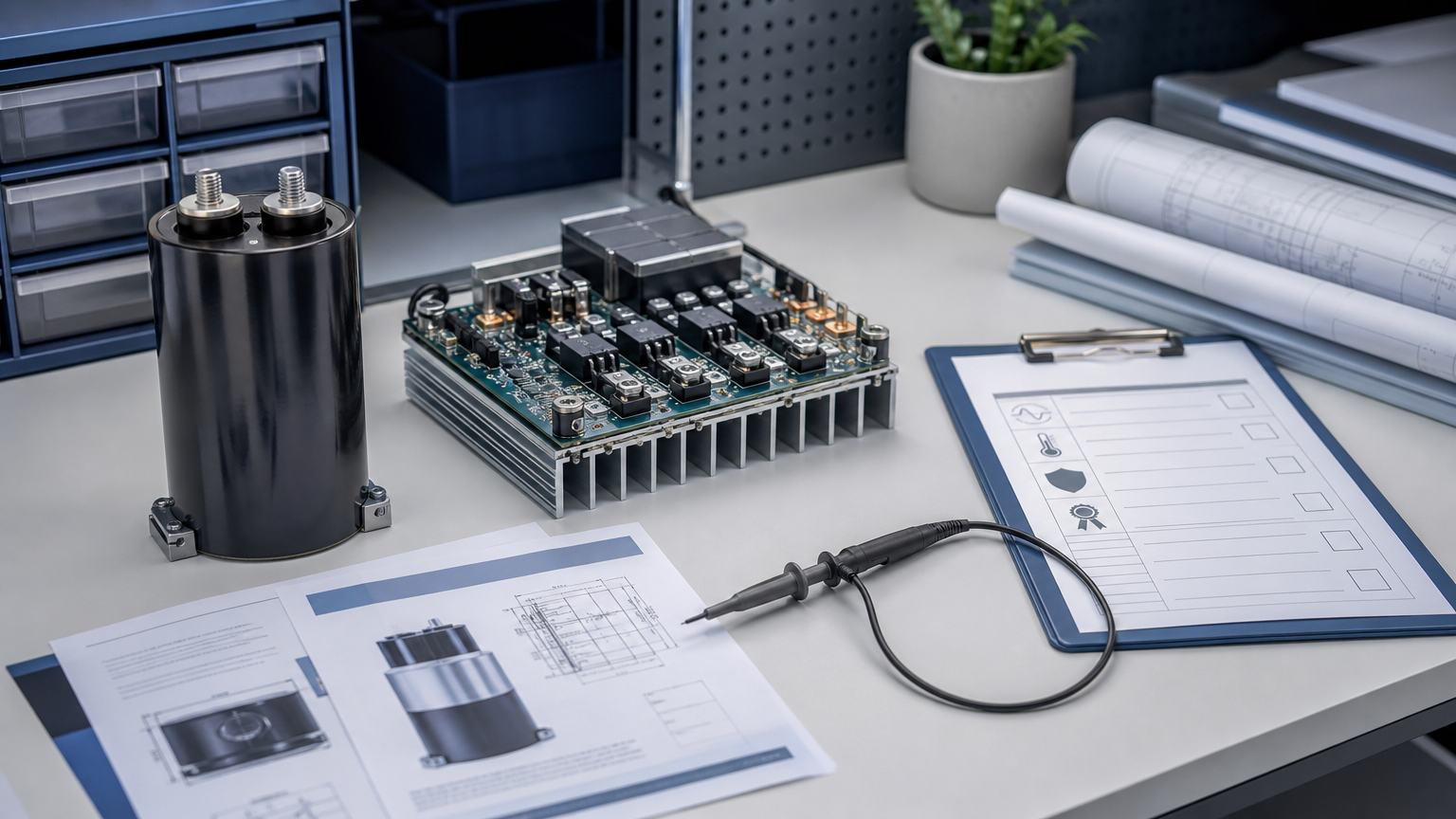
For PCX buyers, the immediate action is documentation discipline. If an engineering file only lists capacitance, voltage, package, and a preferred manufacturer, the sourcing team may not have enough context to evaluate a quote, request alternates, or screen stock offered under time pressure. DC-link capacitors in SiC inverter designs can be tied to ripple-current capability, equivalent series resistance, equivalent series inductance, thermal limits, lifetime assumptions, mounting constraints, and approval history. Those details should travel with the part number before the buyer asks the market for options.
The source signal
Electronic Design reported on June 30, 2026, that SiC devices are changing DC-link capacitor design rules in EV traction inverters. The article says SiC MOSFETs switch faster than traditional IGBTs, that higher ripple-current frequencies and steeper voltage transitions place greater stress on DC-link capacitors, and that engineers need to consider parameters including ESR, ESL, ripple-current capability, thermal behavior, and reliability. That supports a sourcing-process lesson: the capacitor line in the BOM should carry the engineering evidence needed for review, not just a generic passive description.
Where a capacitor alternate can fail the application
The point is not that a DC-link capacitor is hard to buy in every case. The point is that a near match can fail the application if the RFQ does not carry the limits that made the original part acceptable. A lower-capacitance DC link may be part of the SiC design choice. Faster switching may push the review toward ripple-current heating, parasitic inductance, and voltage-spike behavior rather than a simple capacitance comparison. A buyer who only sees value, voltage, and package can miss the reason engineering selected the original part.
For that reason, PCX should ask for the acceptance boundary before treating an offered capacitor as a candidate. Which ESR range is acceptable? Is low ESL a must-have because of bus structure or switching edges? What ripple-current rating and temperature-rise assumption did engineering use? Is the lifetime target tied to a particular hot-spot temperature? Are film and electrolytic options serving different functions, or are they genuinely interchangeable for this design? These questions make the article different from a generic substitution-file checklist: the decision turns on DC-link electrical limits.
RFQ fields that should be explicit
Before asking for availability, attach the rated voltage, capacitance tolerance, ripple-current requirement, ESR and ESL expectations if known, operating-temperature range, lifetime target, case size, termination style, mounting or busbar constraints, agency or customer approval needs, and any previous qualification evidence. Add whether the capacitor is handling DC-bus stabilization, ripple-current absorption, transient suppression support, or another defined role in the power stage. If the program allows alternates, name the acceptable manufacturers or ask engineering to define what requires approval before purchasing can proceed.
It also helps to separate urgency from verification. If the current part is scarce, the sourcing team still needs traceability, packaging and labeling review, date-code acceptance rules, and documentation aligned to the program risk. For high-value or reliability-sensitive power assemblies, the RFQ should make inspection expectations visible before the order is placed. PCX’s Star Quality Program is relevant here because the right response to urgency is more disciplined evidence, not looser acceptance.
Adjacent BOM lines to keep in the same packet
The DC-link capacitor is not the only part whose assumptions may be coupled to the SiC inverter design. Buyers should also flag gate drivers, current sensors, protection devices, busbar hardware, thermal-interface materials, connectors, and related discrete semiconductors or passive components that share the same qualification boundary. A capacitor alternate may be acceptable only if the surrounding power-stage assumptions stay intact.
PCX market insight
The practical sourcing lesson is simple: SiC design signals should become better capacitor acceptance notes. They should not be turned into unsupported claims that all DC-link capacitors are short, expensive, or interchangeable. When buyers send PCX the exact MPN, approved alternates, electrical limits, thermal notes, and documentation requirements, PCX can review sourcing options with the right guardrails. Without that context, the safest answer may be to pause and request the missing evidence before pursuing an urgent buy.
This re-angle matters because PCX has already covered broad sourcing-file discipline in other posts. The narrow question here is different: does the capacitor RFQ describe the DC-link performance envelope created by SiC switching behavior? If it does, sourcing can look for parts that fit a defined electrical and thermal window. If it does not, the buyer is left comparing catalog rows that may not represent the qualified design.
RFQ next step
If a SiC inverter, motor-control, or high-power conversion BOM has capacitor lines approaching a purchase decision, send PCX the exact part numbers, approved-source notes, and any electrical or thermal constraints attached to the design. The parts request form is the right place to start when the search needs to respect qualification, traceability, and sourcing-risk boundaries.
Sources and further reading
- Rethinking DC-Link Capacitors for Silicon-Carbide EV Inverters – Electronic Design, June 30, 2026.